Medieval character at “La Ribera”

As maritime commerce grew in the 13th and 14th centuries, “Barrio de la Ribera” (“neighborhood of the waterfront”) became a populous residential district for the merchant class. Until recently, this area was known principally for its great church called: Santa María del Mar, and the well-known Museu Picasso (Picasso Museum). During the past decade, La Ribera, and in particular the zone within it called El Born, has become the city’s most fashionable district, with chic bars, restaurants, and boutiques. Be advised that it could get a little bit rowdy late at night, but it still retains its medieval character.
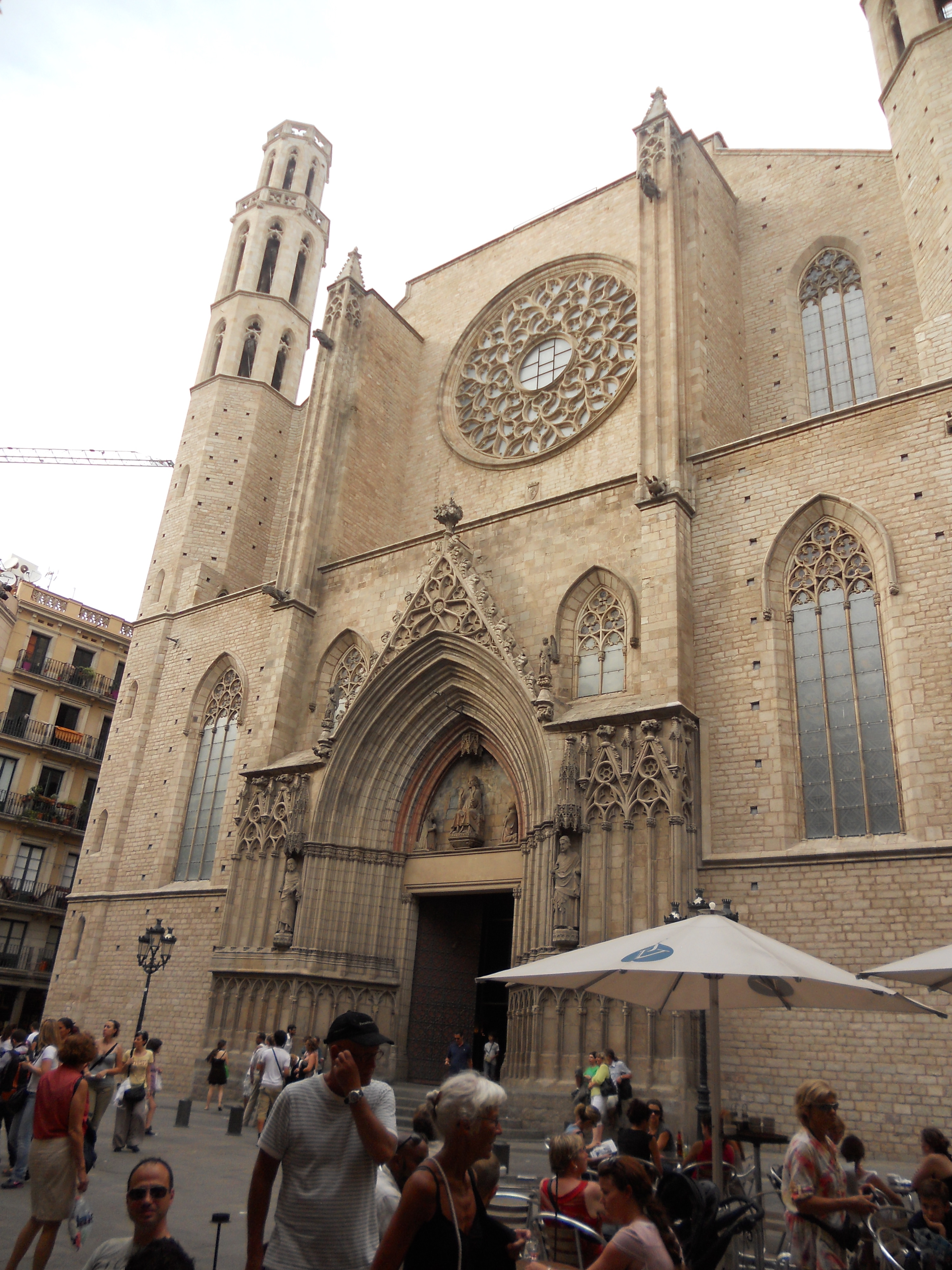
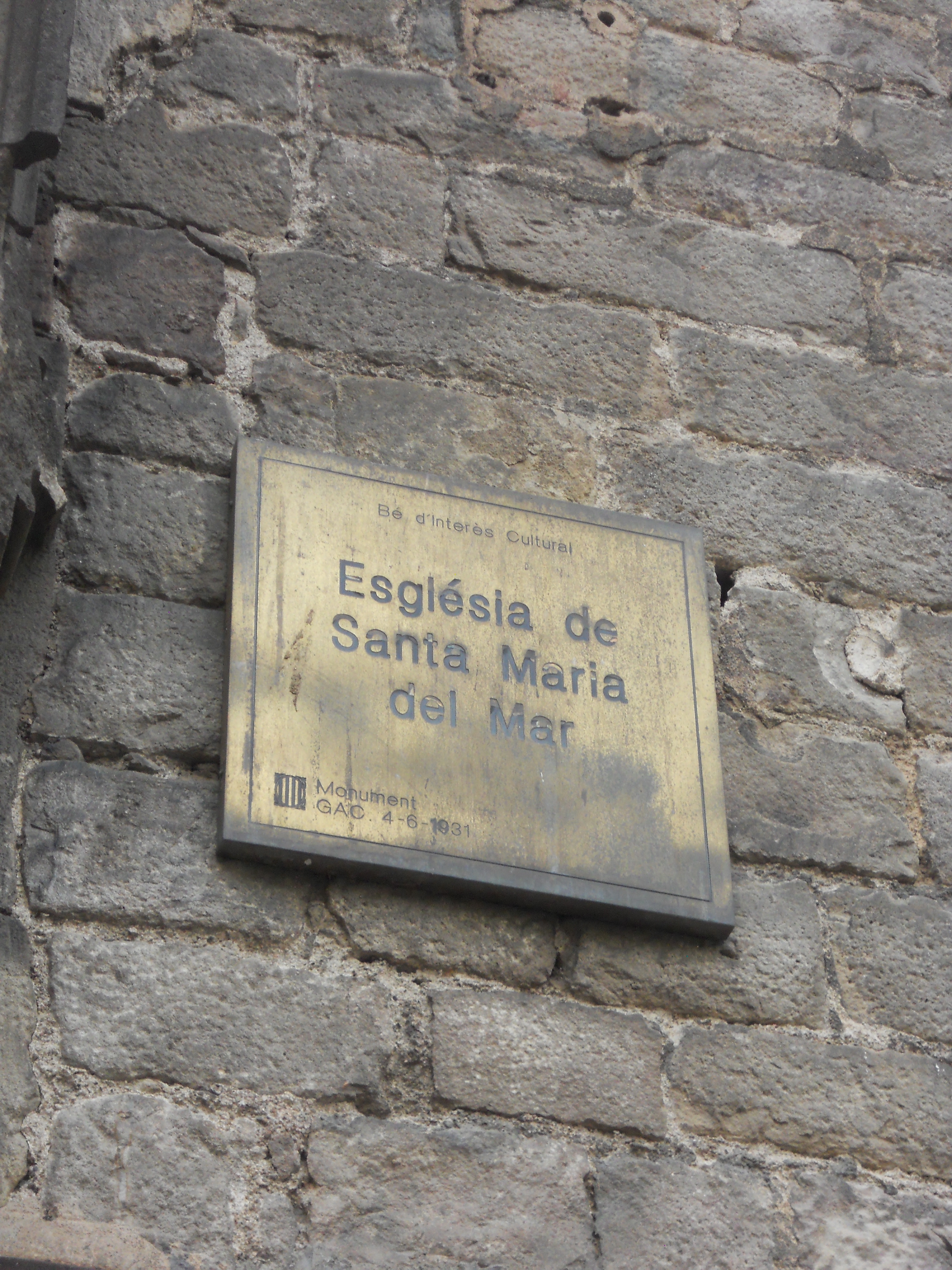
“Santa María del Mar” church
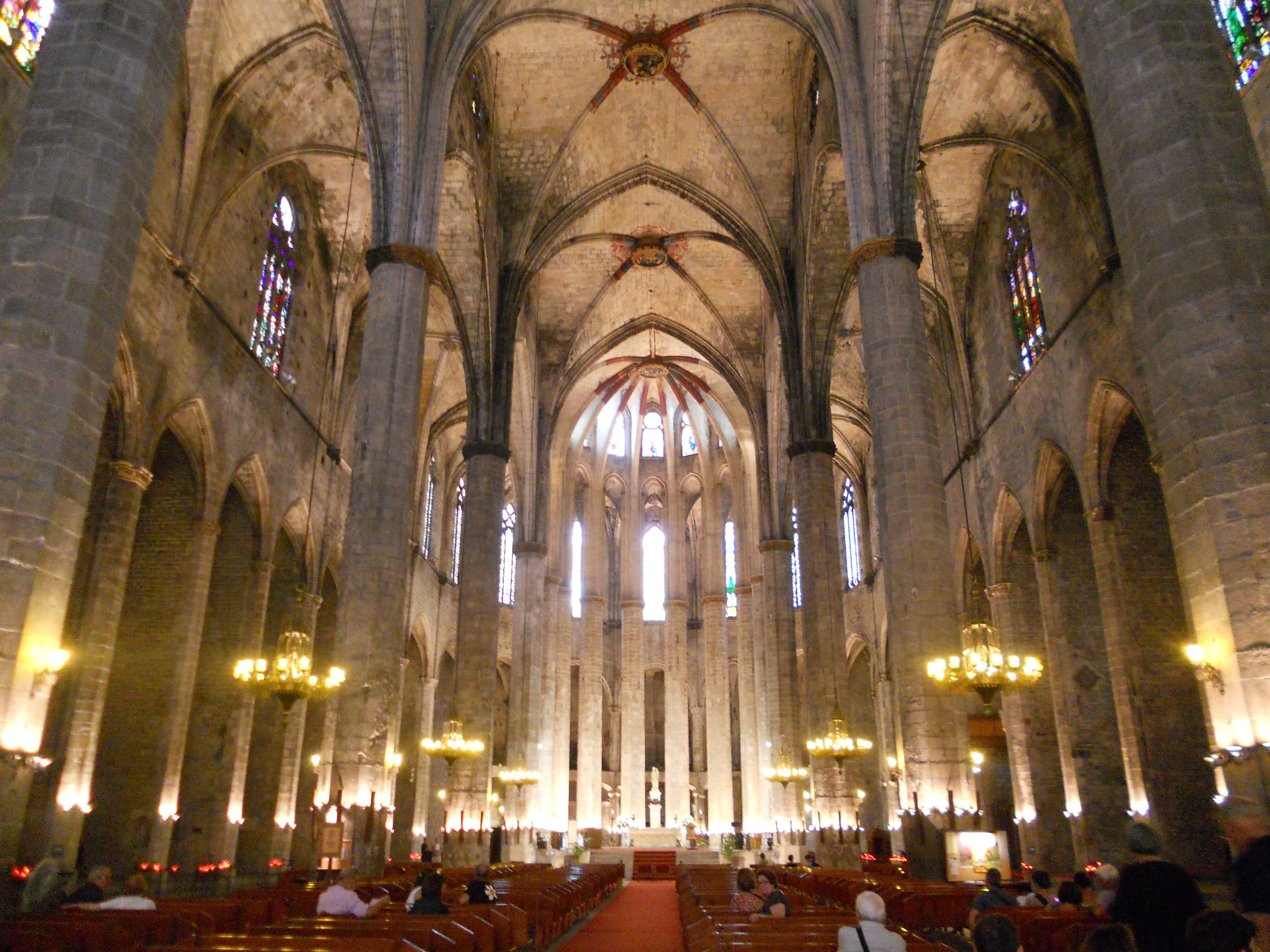
 the inside of this church is beautiful too …
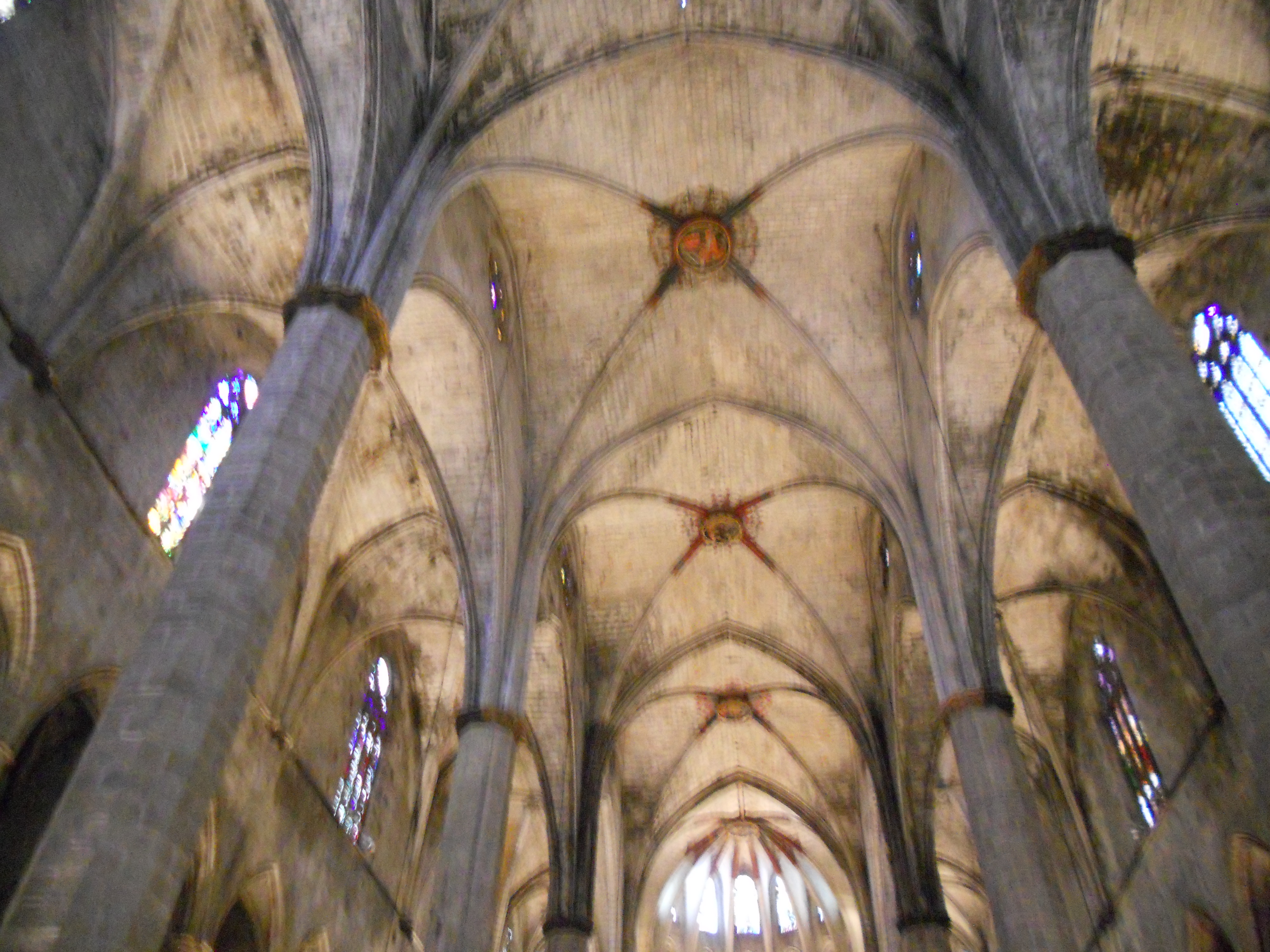
The bride & groom have left, only the red rose petals remains …

Visiting this extraordinarily graceful 14th century Catalan Gothic church Santa María del Mar is a must. It is a good way to clear your head before you continue exploring this bustling neighborhood
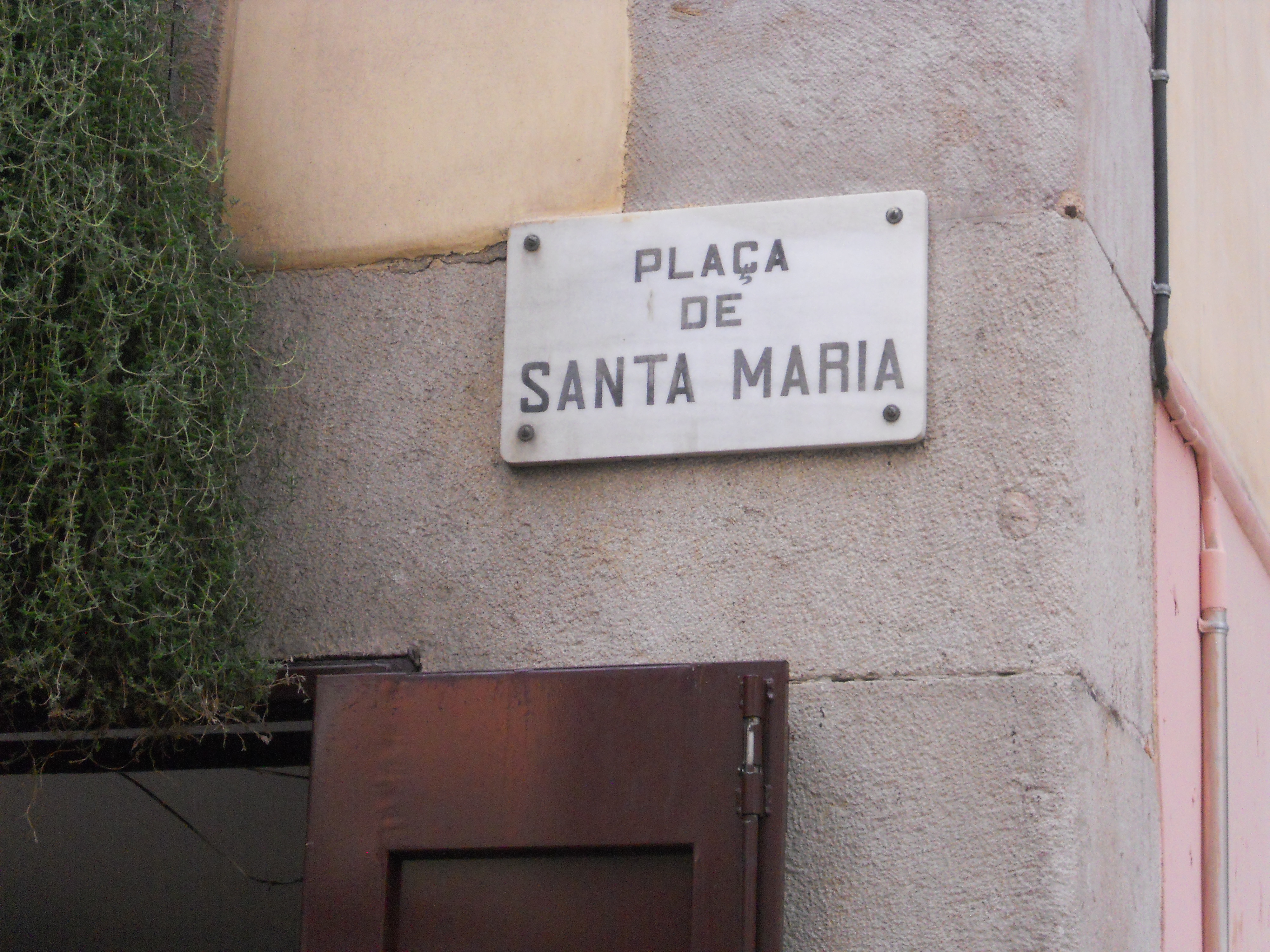
In Plaza de Santa María (Saint Mary Park), just behind the church, you can take a break in many of the chic bars, patisseries and restaurants around
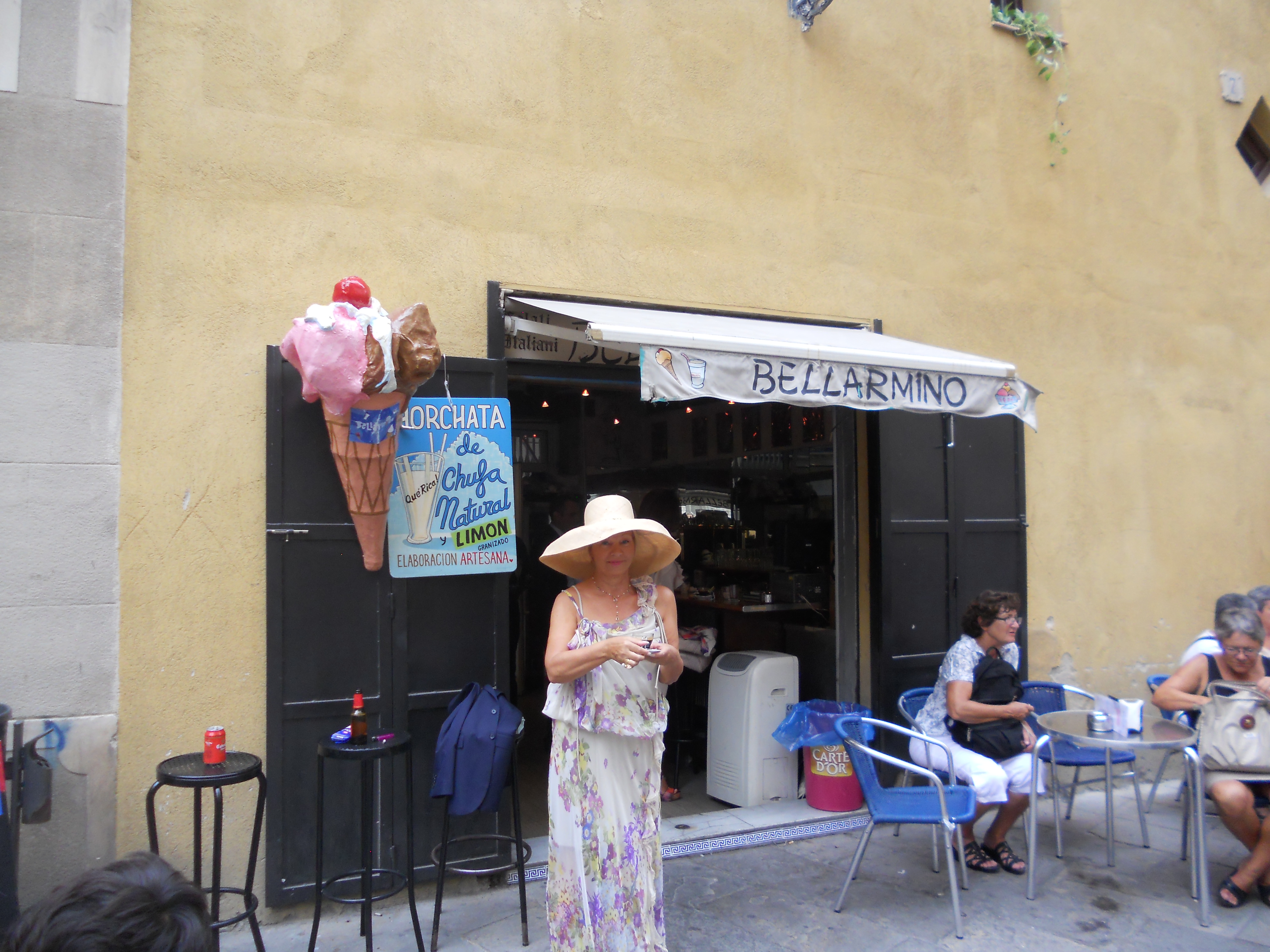
this lady took my advice …

time to sit down, relax and enjoy a drink and a snack in company of good friends

even the amazing human statues find time to take a break along Plaza de Santa María
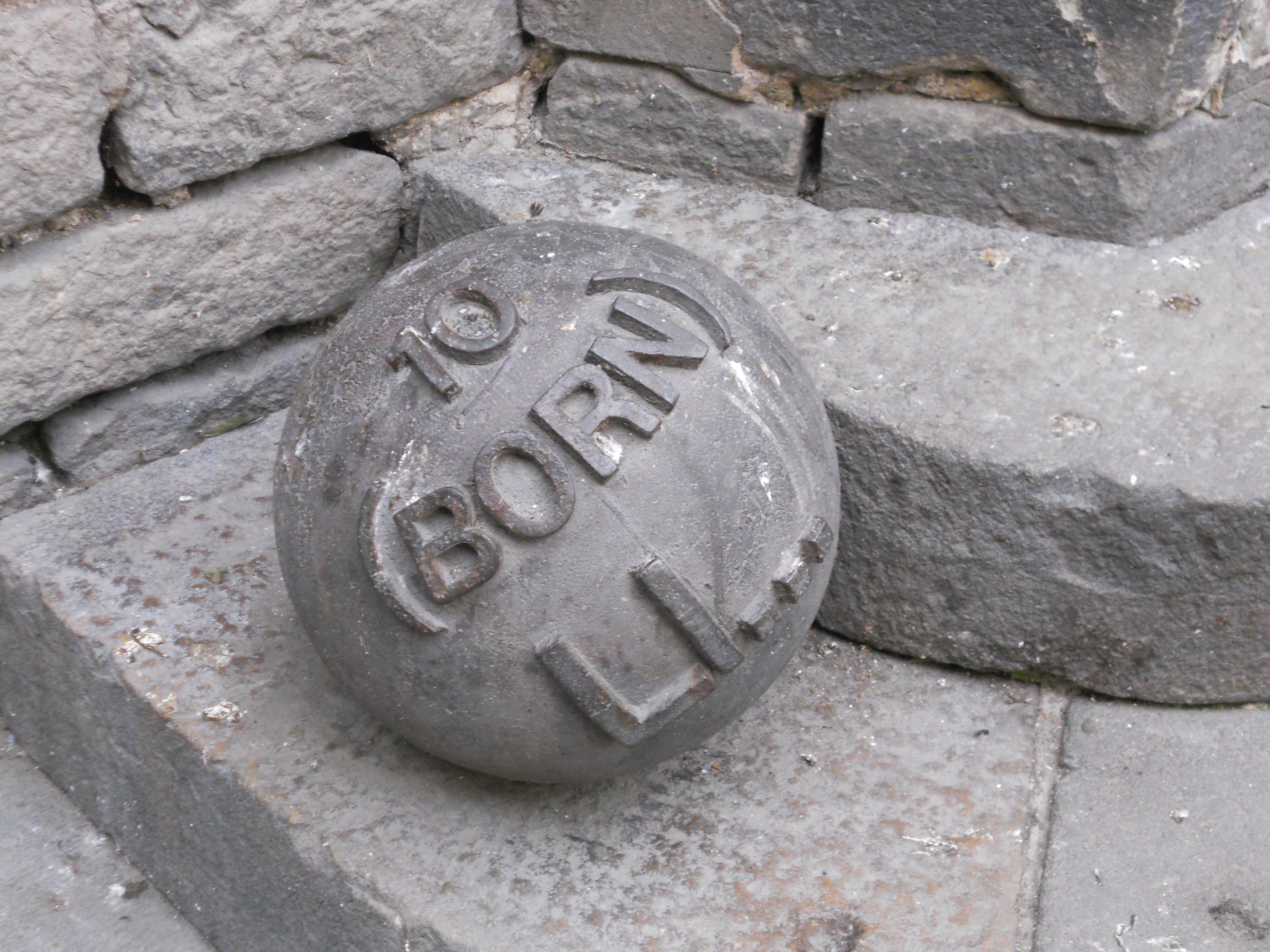
Paseo del Born (The Born promenade) is a wide and elegant tree-lined promenade with stone benches that makes it a good place for a breather. Once the site of medieval jousting tournaments, it became the main square and heart of the city during Barcelona’s seafaring heyday (13th to 18th century). Today apartment dwellers in its Gothic mansions are more commonly up in arms about the busy boutiques, outdoor cafes, bars and pastry shops that populate this neighborhood

right in the heart of this neighborhood, Pastry Chef Carles Mampel member of “Relais Dessert International” and with many world award prizes on the top of his toque (like Best Chocolatier, Lyon – France 2005 and best pastry chef of the world, Rimini – Italy 2004), has one of his four patisseries, bar and catering services: Bubó
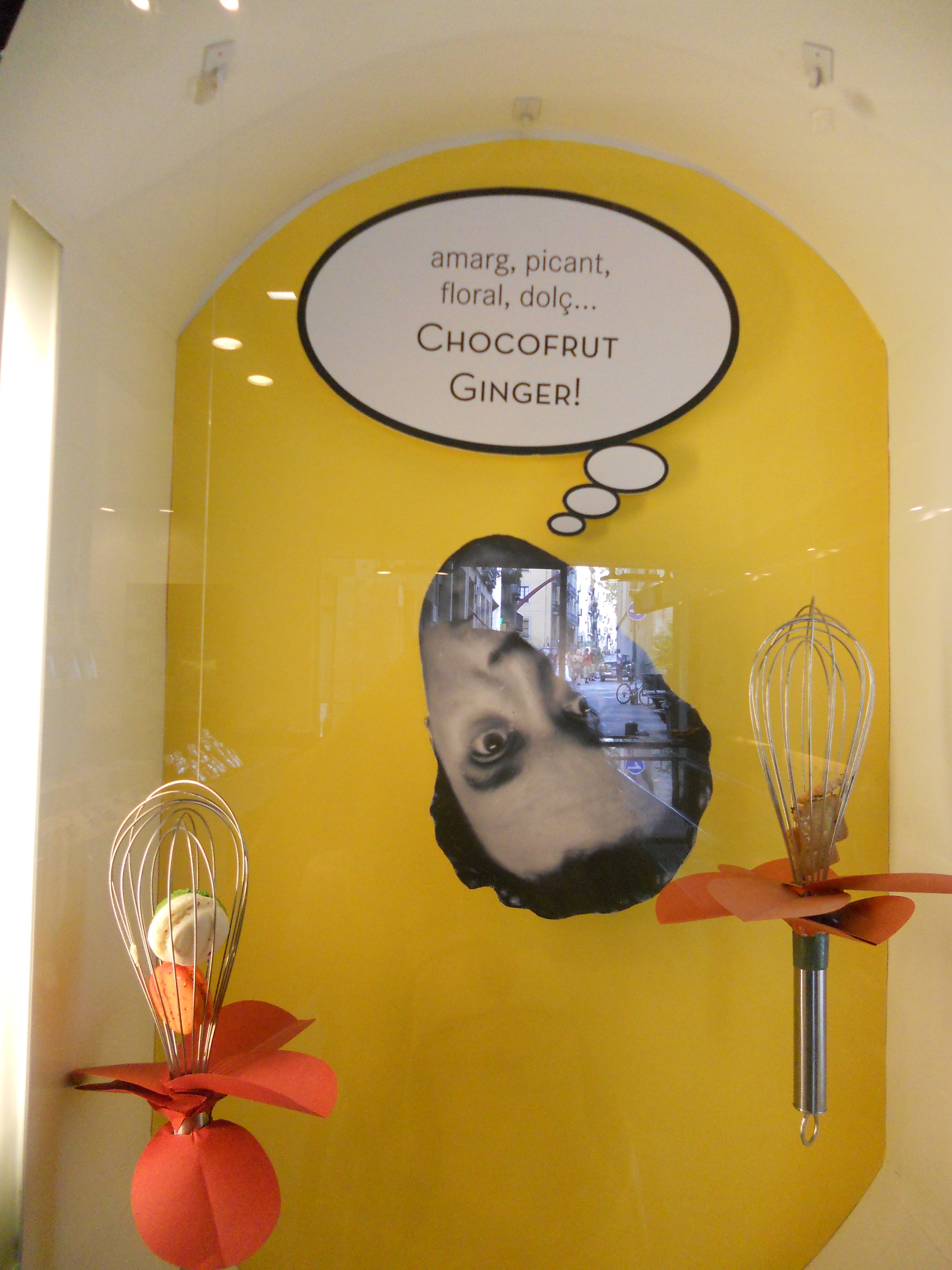
with so many delicious sweet choices offered at this pastry shop, your head will go upside down too!

individual tarts

yum!
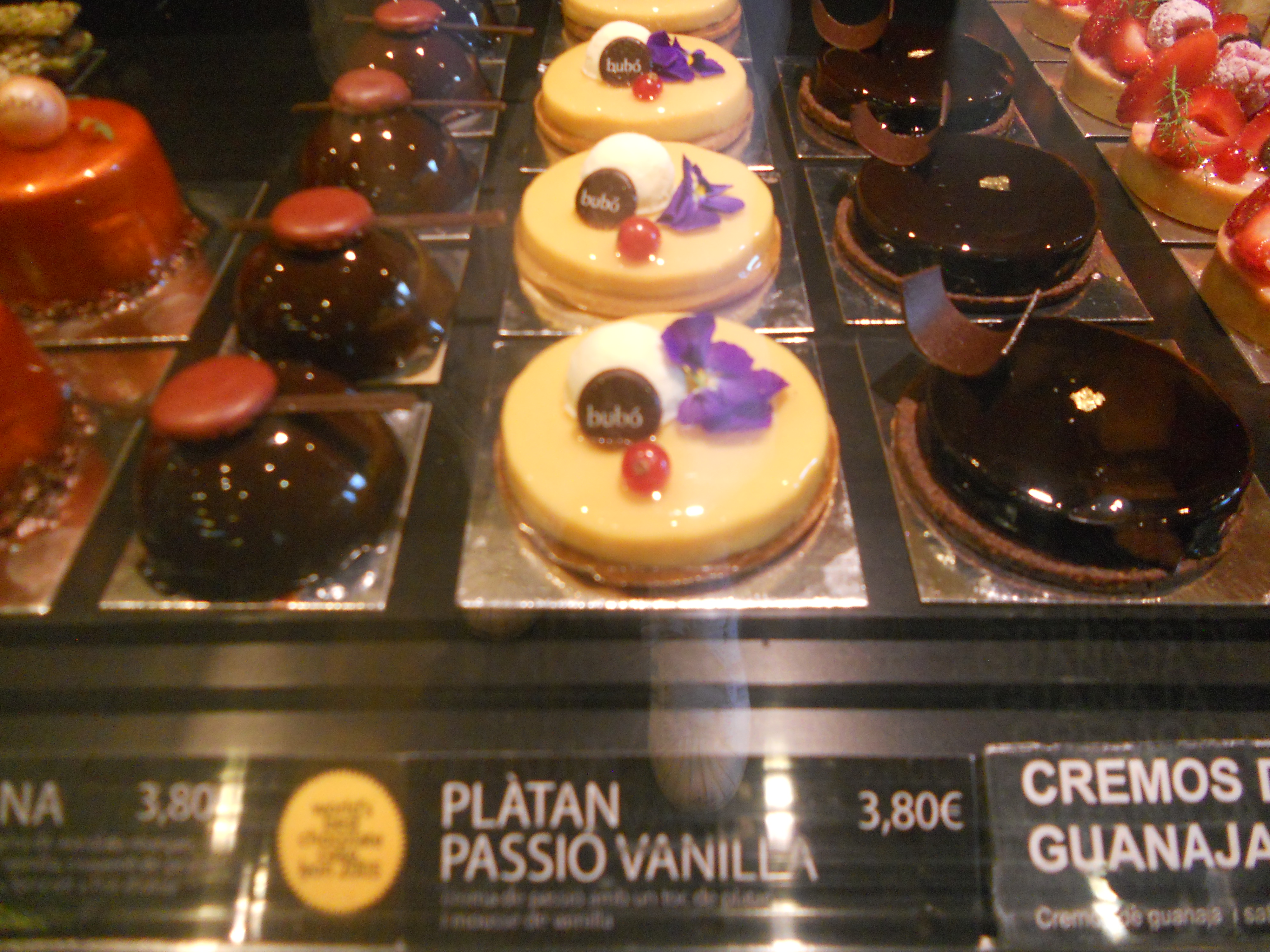
chocolate, raspberry, vanilla, passion fruit, nectarine, and much more flavors …

apple tart, Napoleons and much more

colorful macaroons
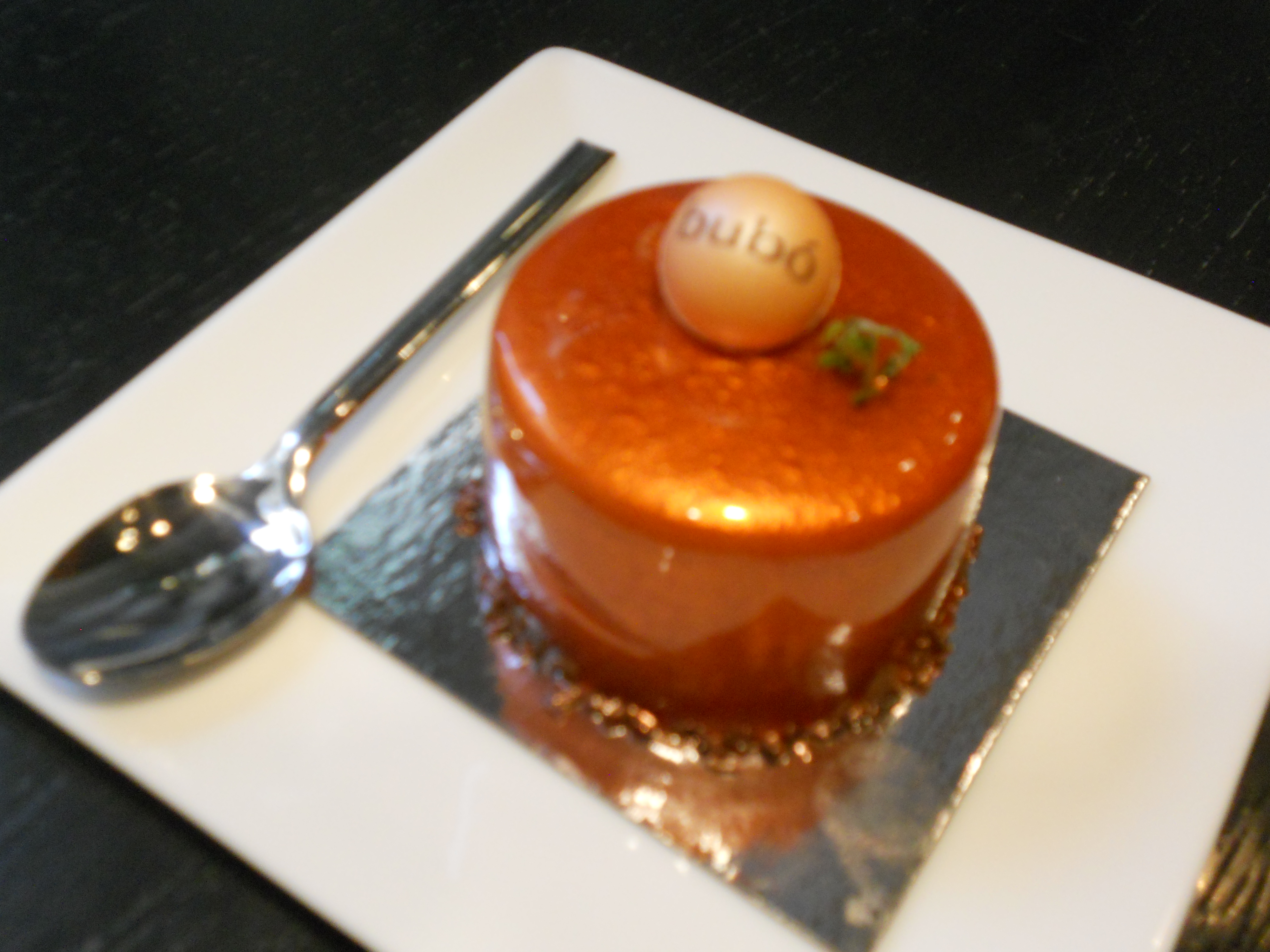
Bubó has its own tasting room where I decided to take a break and enjoy this exquisite individual tart
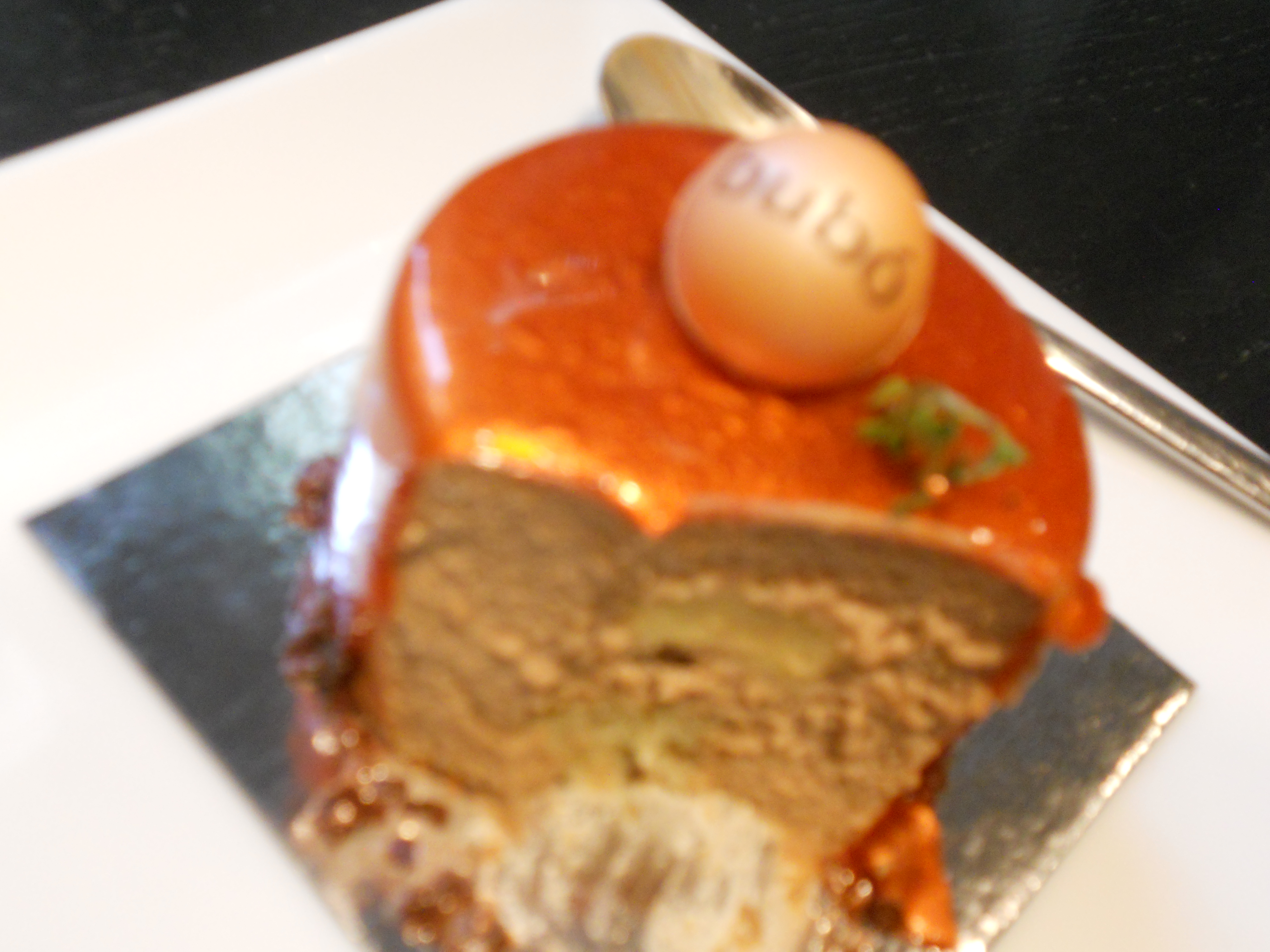
sponge cake, milk chocolate mousse, heart of clementine cream and confit covered in a shiny clementine chocolate glaze with chocolate decór on top … wow!
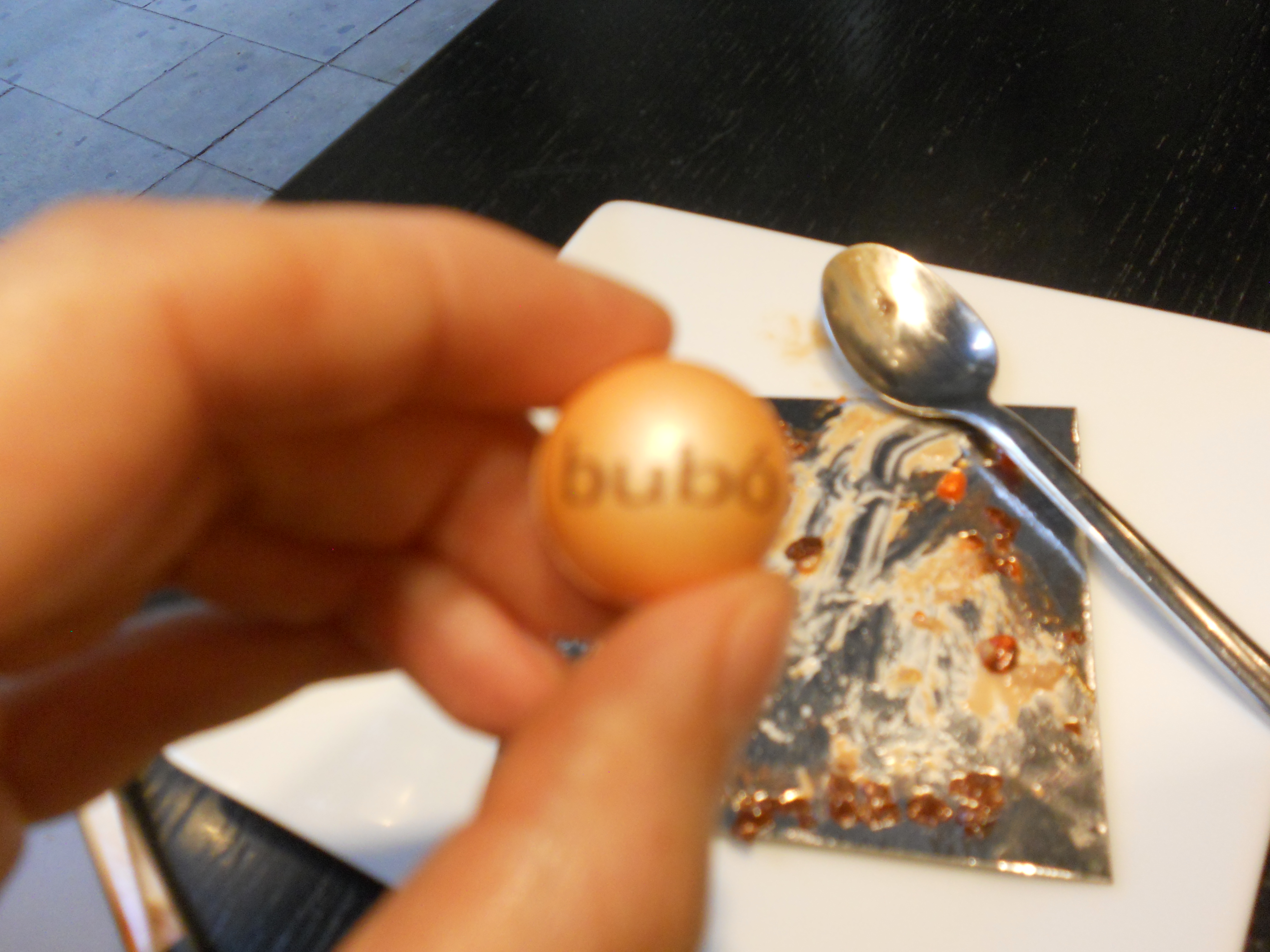
it was worth every bite!
after my sweet tasting at Bubó, it is time to keep walking and exploring the neighborhood

walking down carrer de la Argenteria (Argenteria street) and leaving behind the congestion of Via Laeitana, I arrived to “The Roman Great Wall”, where I was amazed by all the work of art found in the architecture of each building and cathedral around

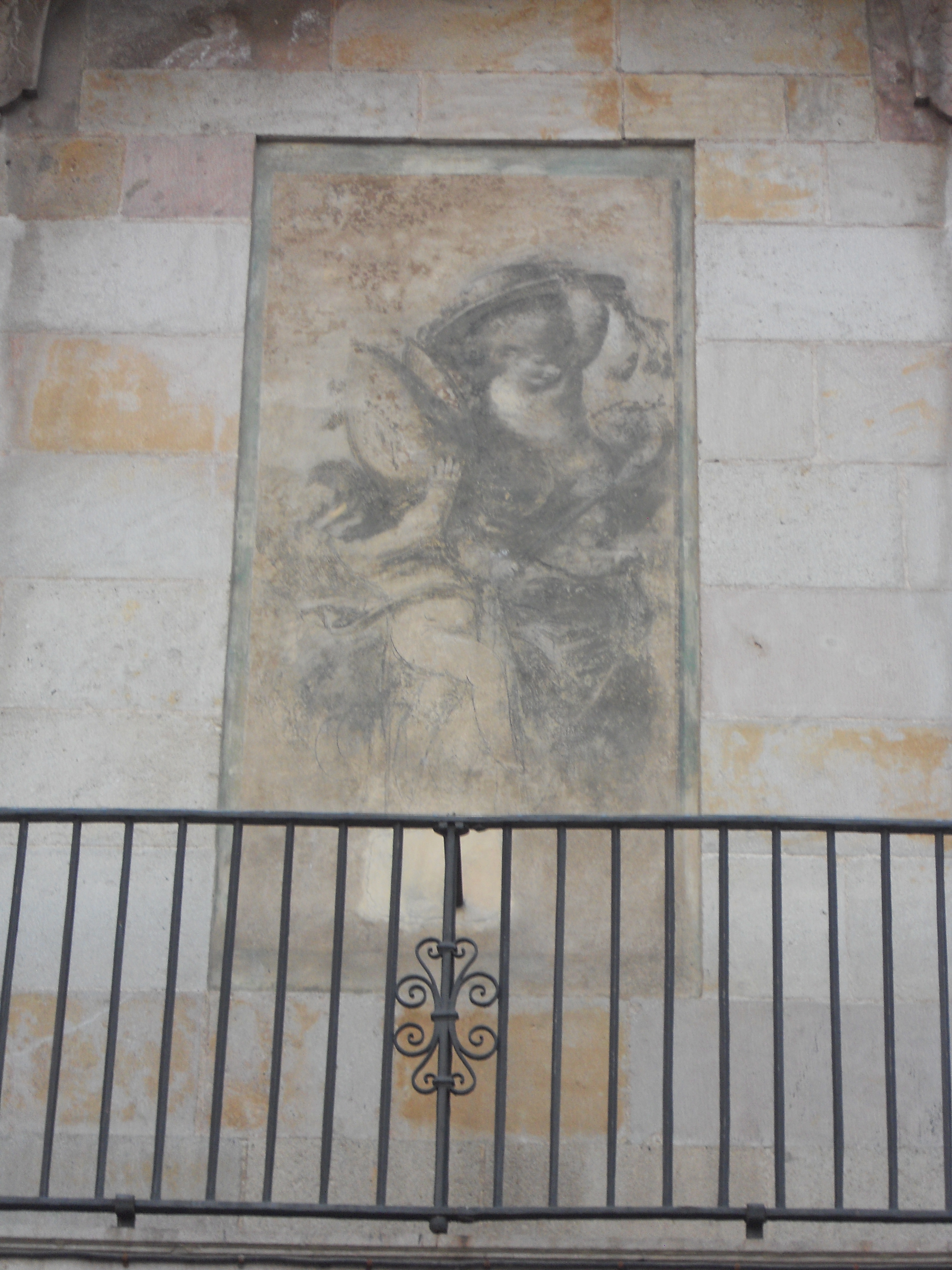
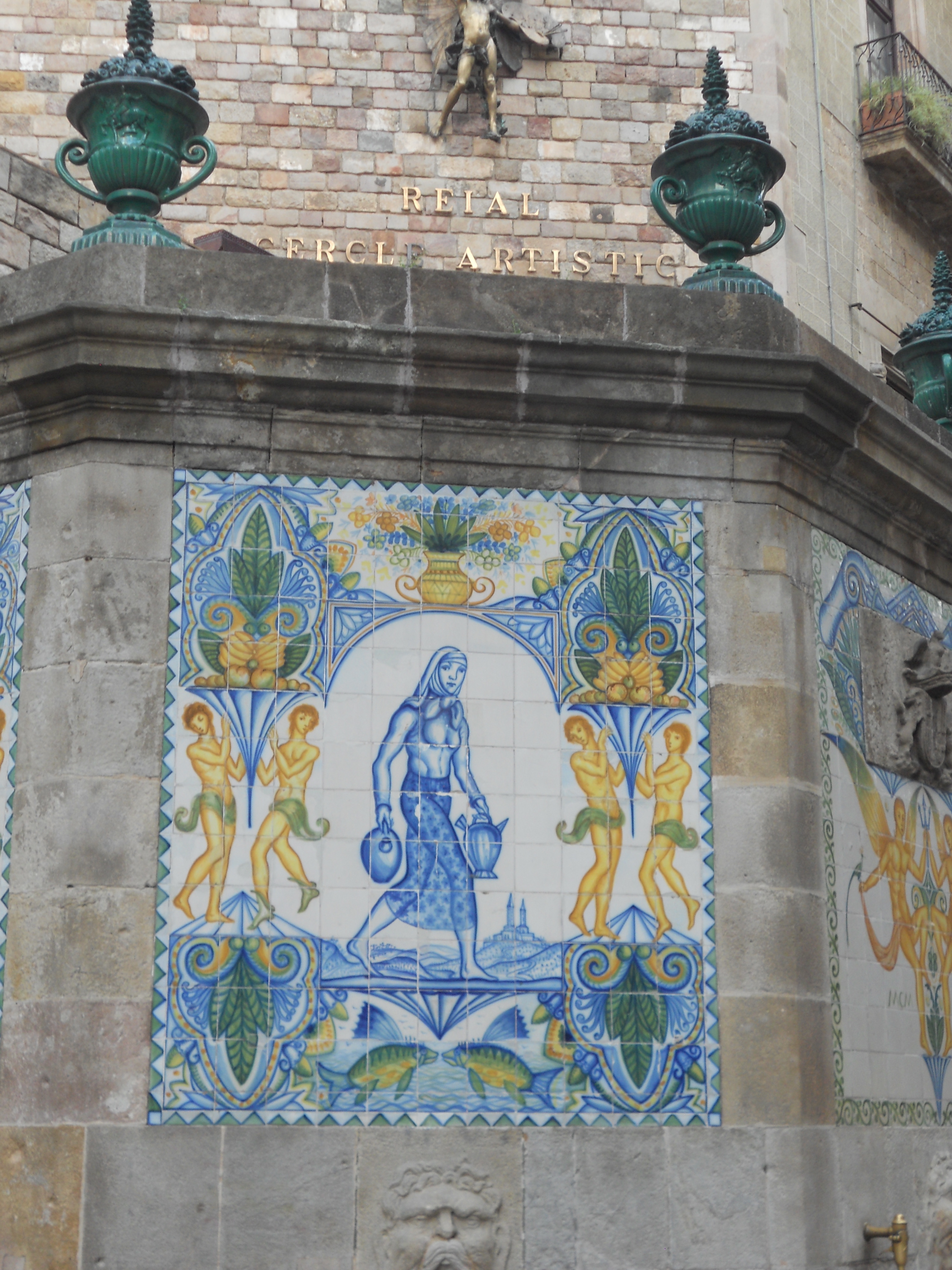
can you see this hand painted mural on the wall of this building?

beautiful art displayed in this mosaic wall decór

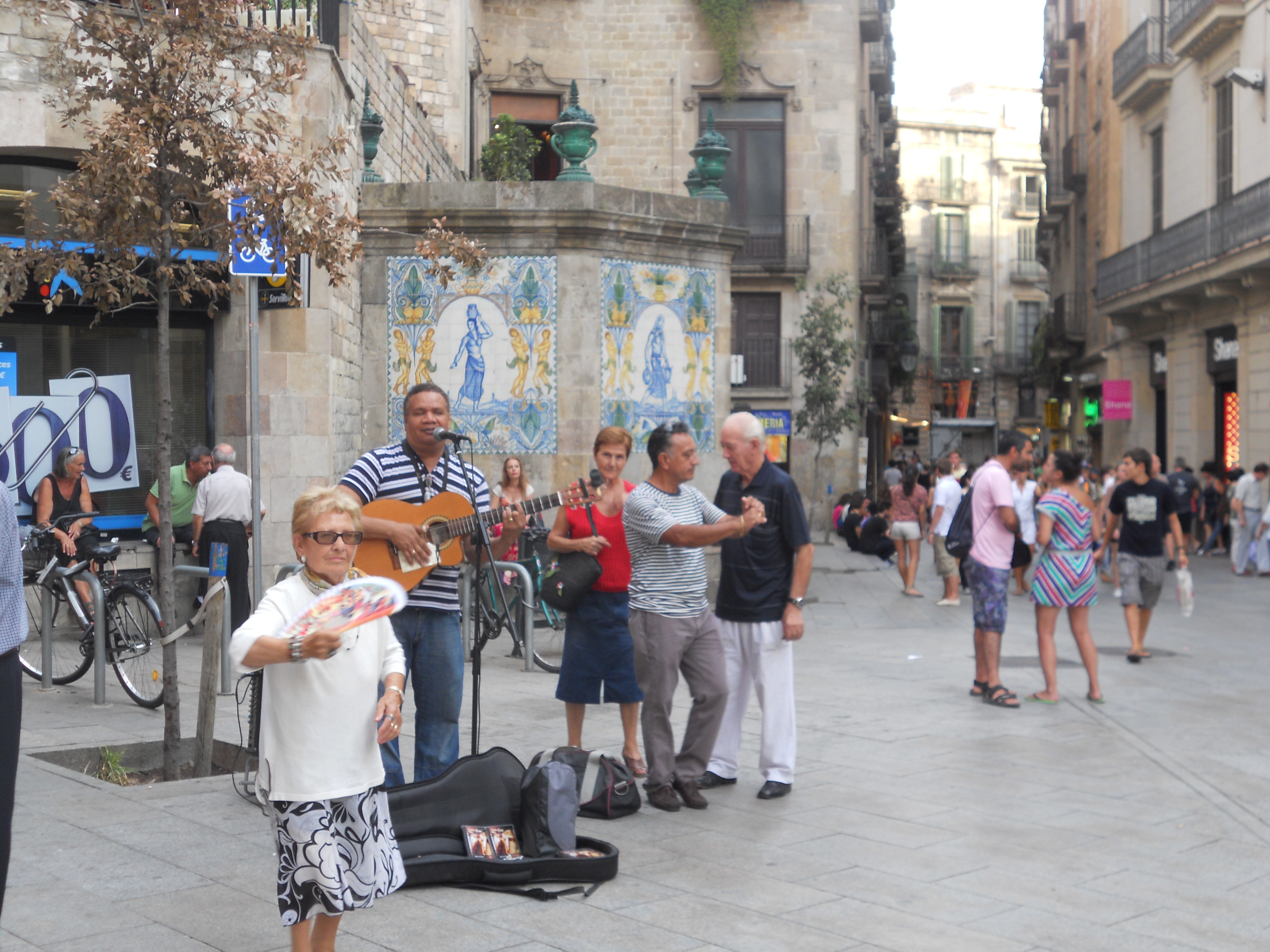
it is always a good time to enjoy music from the local artists

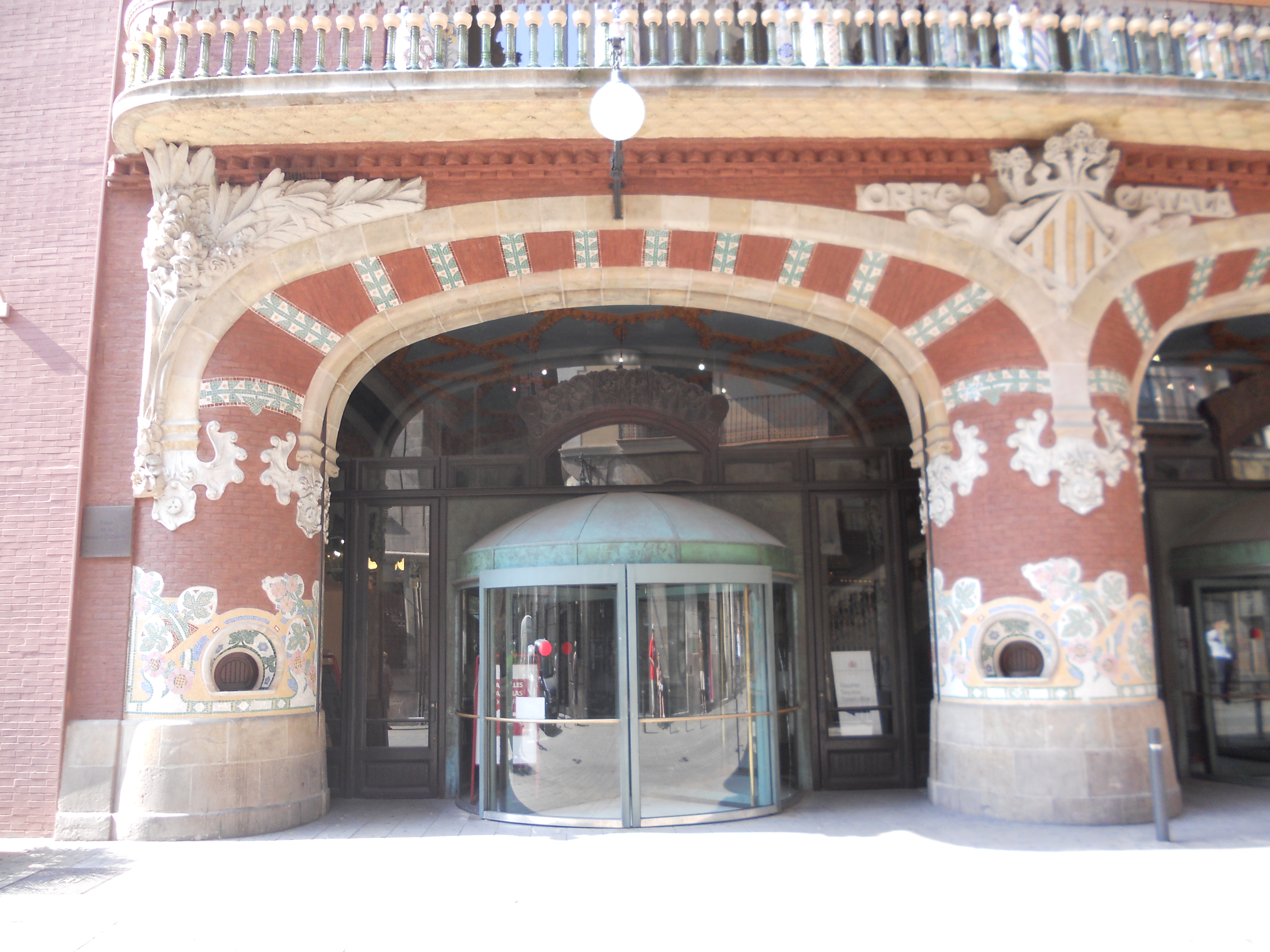
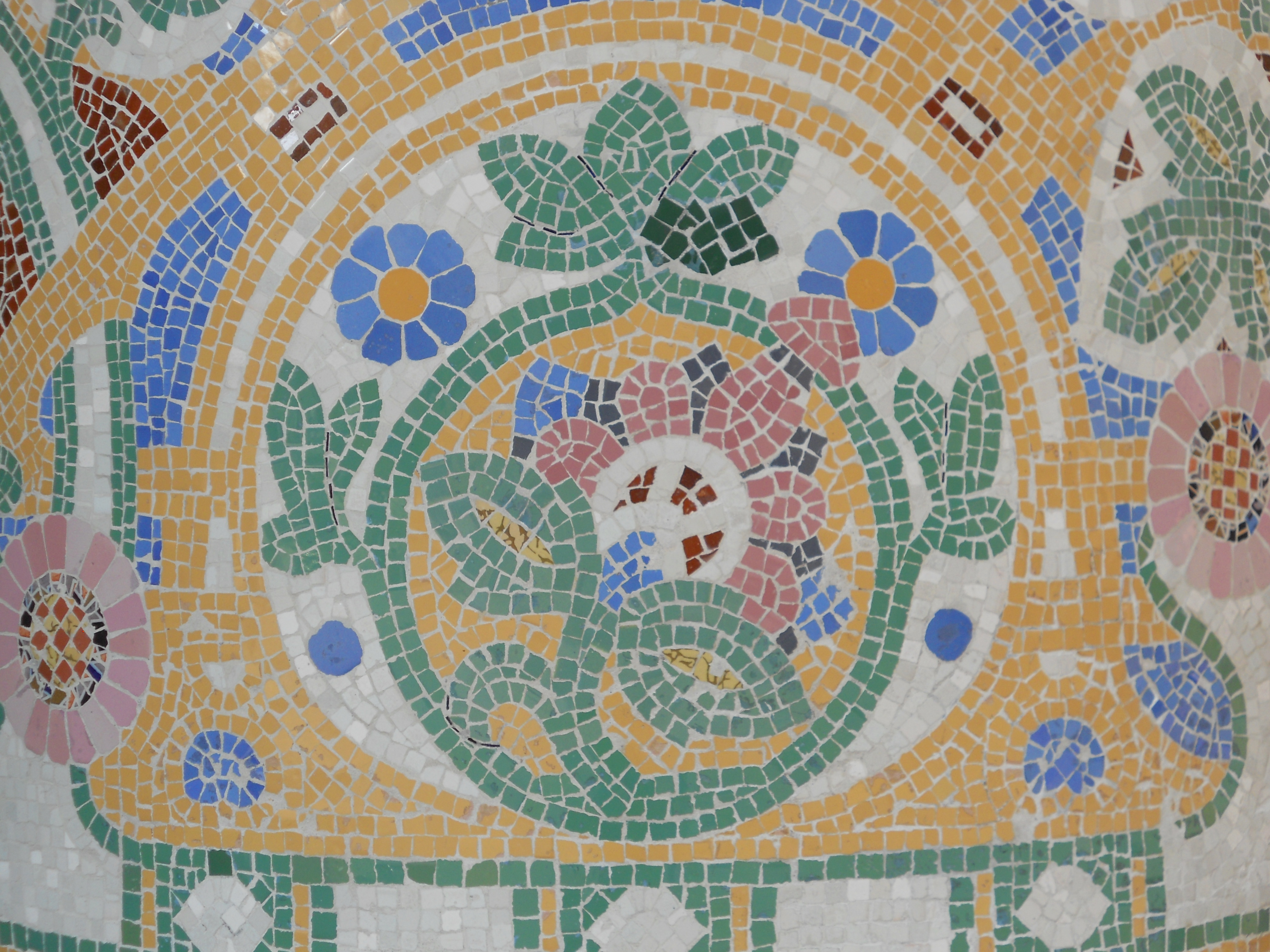
reaching Sant Pere mes alt street, we find El Palau de la Música Catalana (The Catalan Music Palace). This magnificent 1908 music hall is over-the-top ornate and one of Barcelona’s Modernism masterpieces. Fantasy of ceramics and  colored glass inside and out.
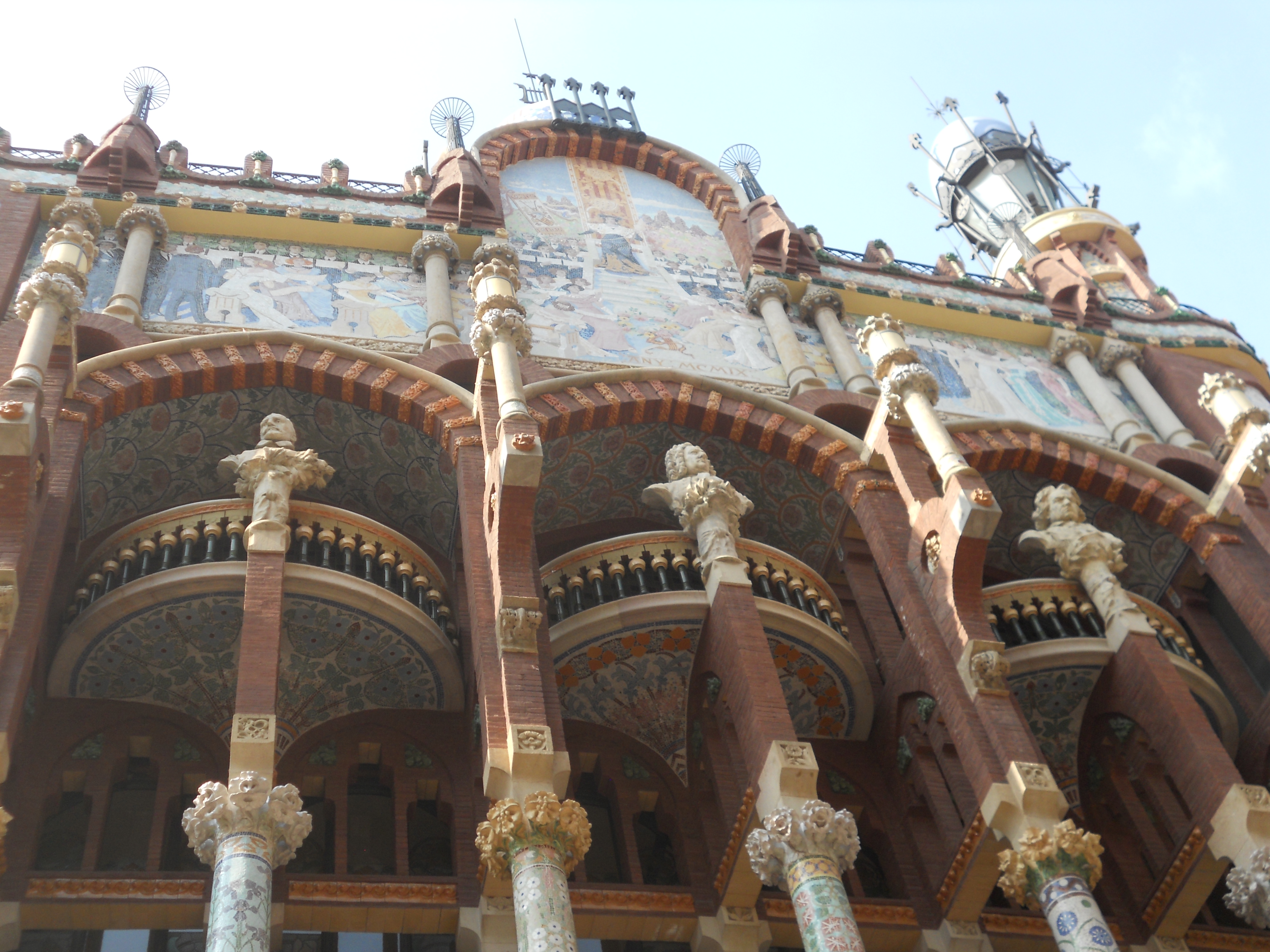
the mosaic work in the Palace of Catalan Music facade is amazing!
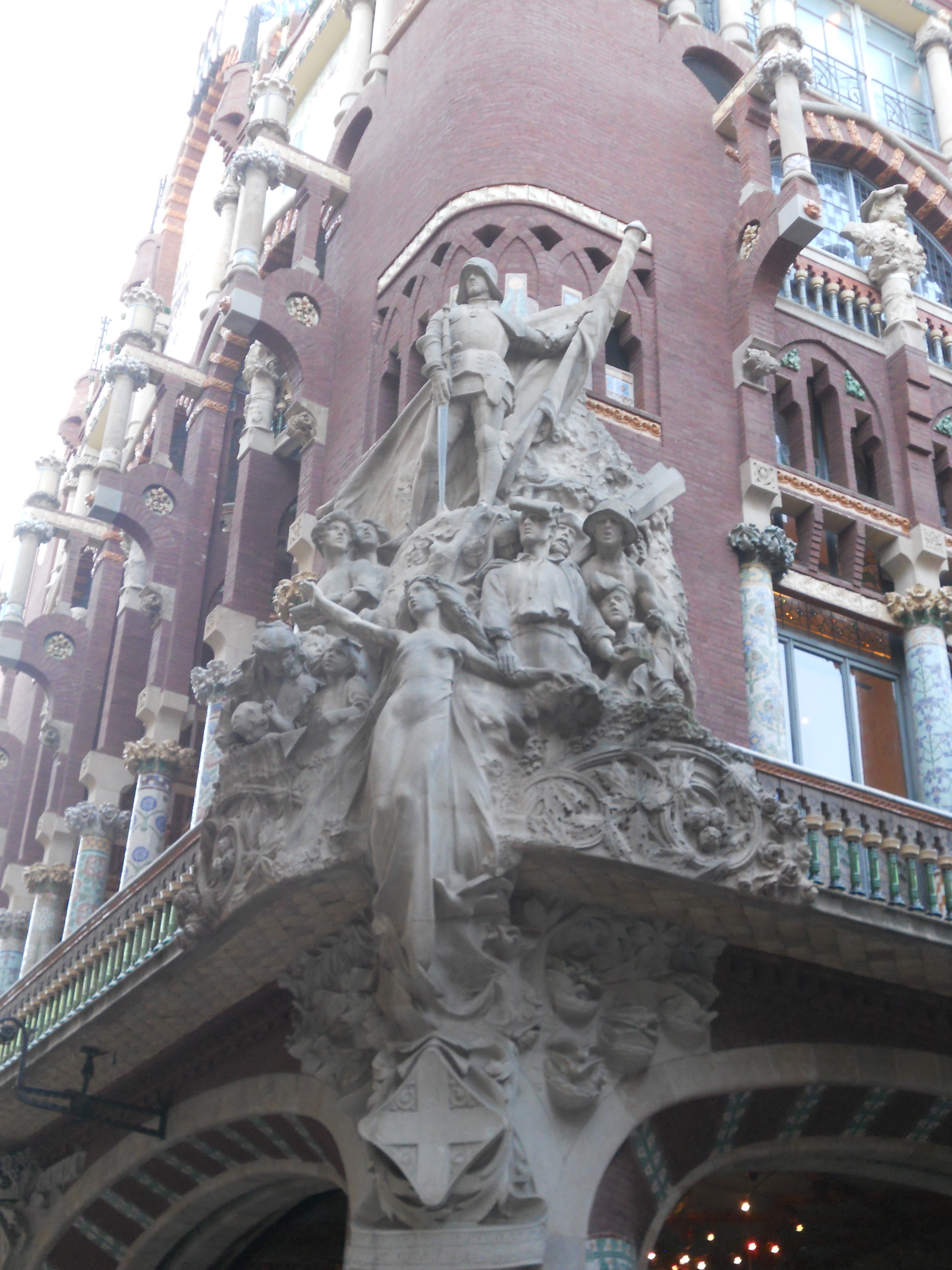
wow!
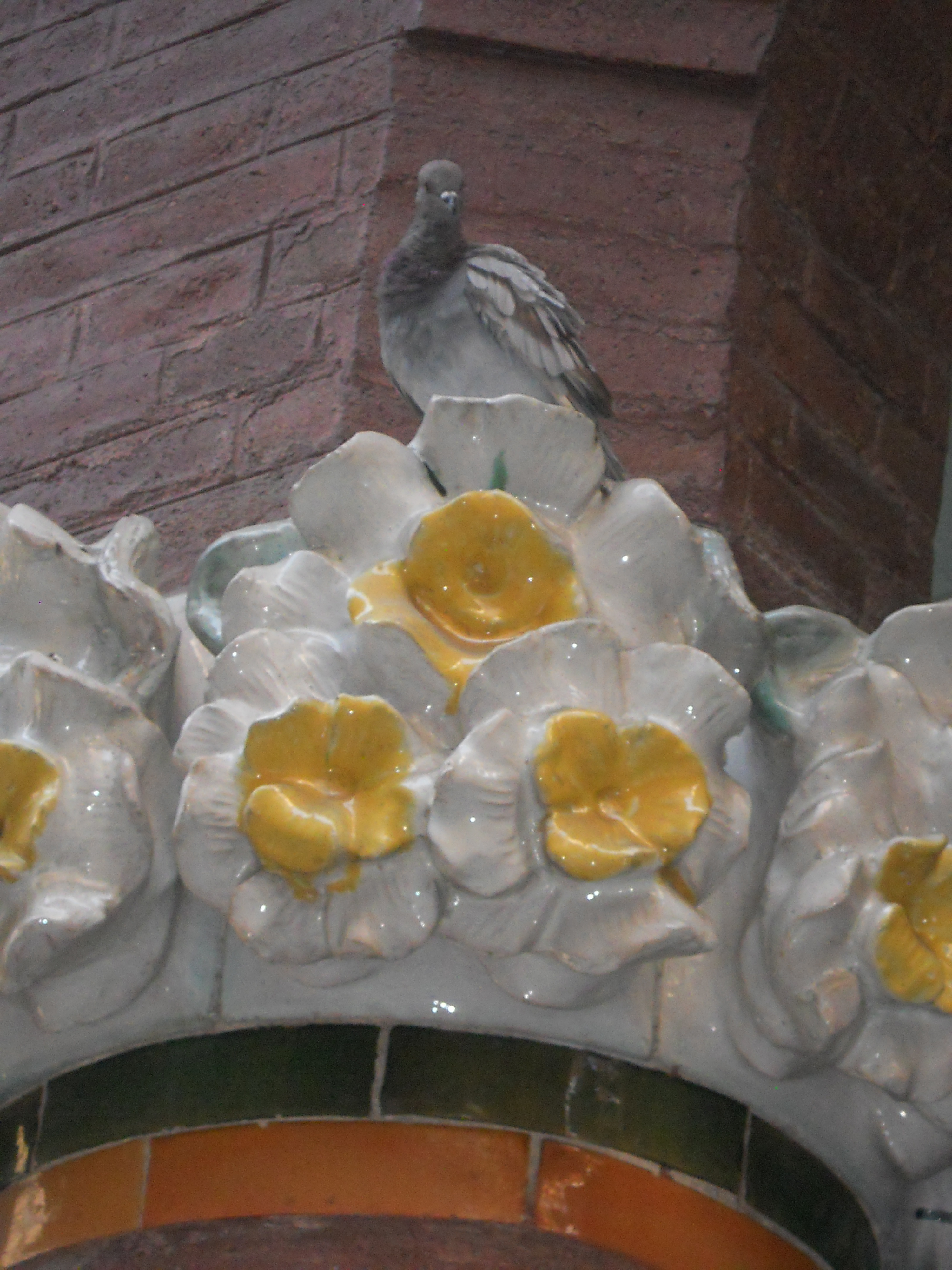
home sweet home for this little dove

this is surely the most exuberant music palace you will ever see!
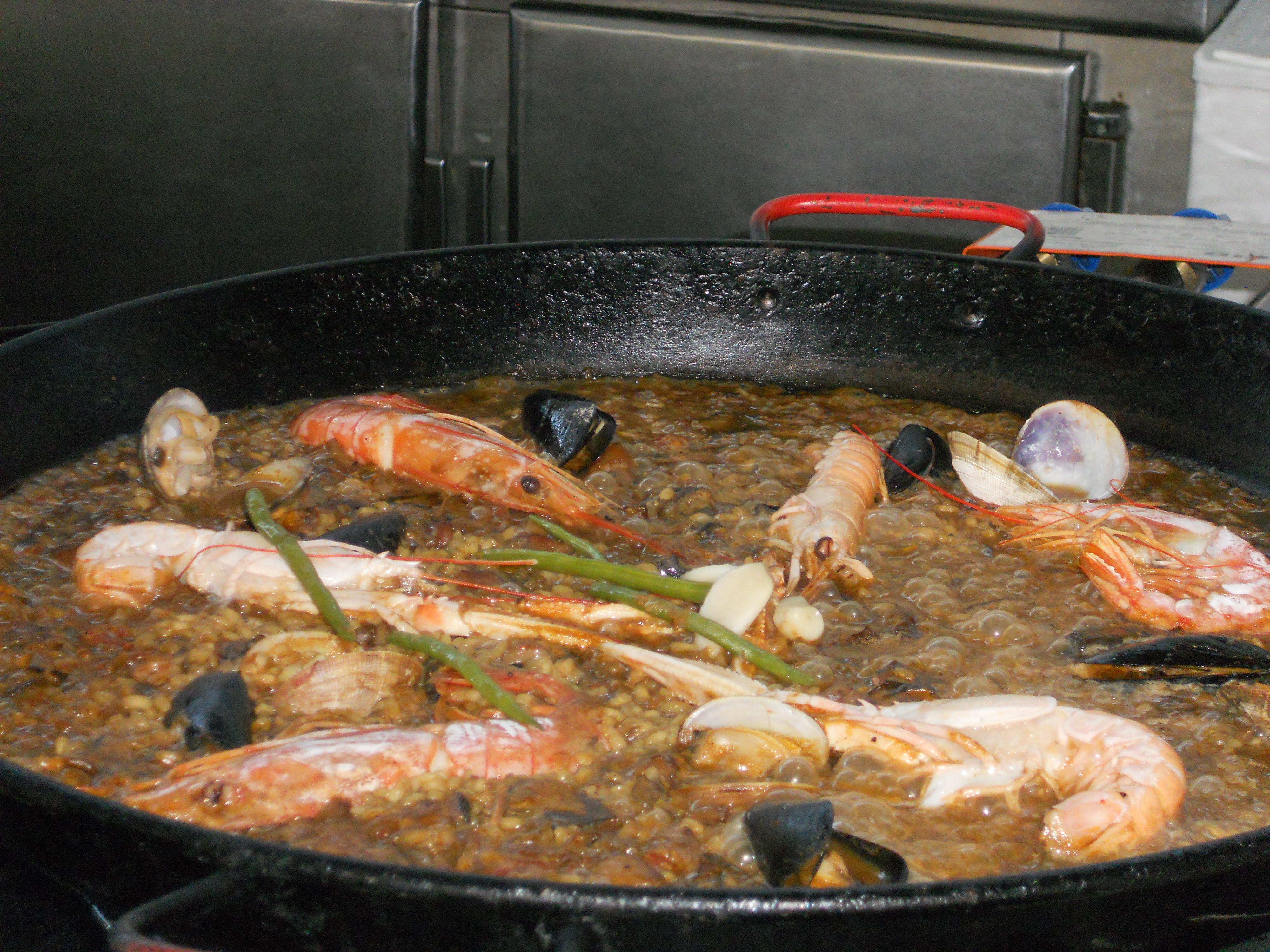
A recipe for success: “Paella”

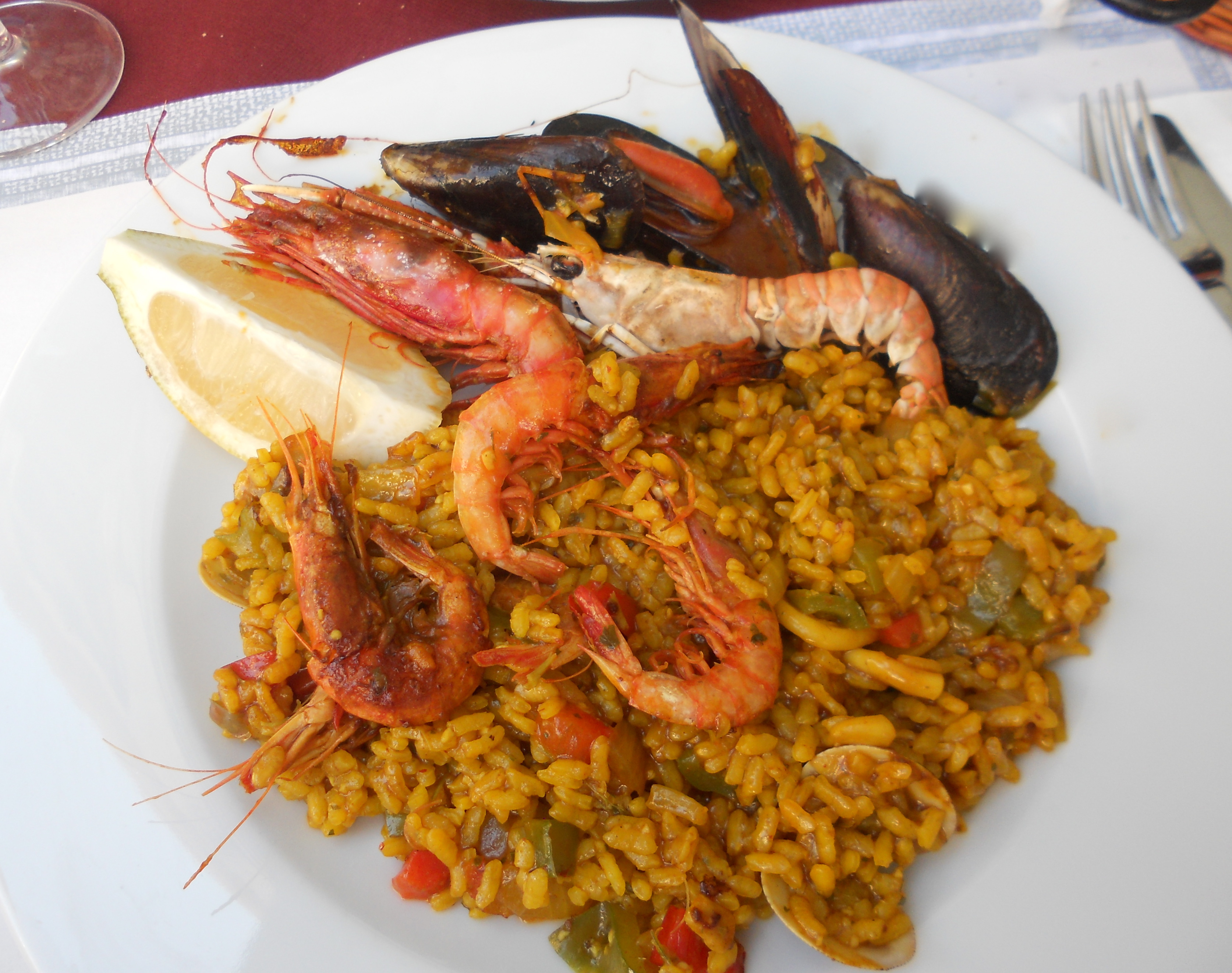
I dedicate this post to one of my favorite dish to eat, while in Spain, or to cook at home: paella. When it is made properly, you have a recipe for success that can be enjoyed for everyone. You can adapt the basic recipe according to your food preferences: add seafood for a “seafood paella”; add chicken, pork or rabbit (like they do in Valencia, Spain) to the seafood and you have “mixed paella”; add just vegetables and it will be a delightful dish suitable for all vegetarians. As I said before, you can not got wrong with it!

To my opinion, there is not better dish that brings together the fruits of Spain’s rich soil like: rice, fresh vegetables, plump chickens, rabbits, pork, abundance in seafood and shellfish with the use of the distinctive olive oil, than paella.

It is essential to choose the correct utensils and the freshest ingredients to make paella. You will need a special pan that it is different from the regular frying pan that you probably have in your kitchen. These pans called “paelleras” have a special low border about 1 1/5 inches deep and has dips in the central part like a golf ball and two rather large handles on each side. There are paella pans measuring from 7 inches to 1 yard wide and for special occasions for hundreds of people to eat from. When considering  to buy your pan, choosing the right size is very important. Knowing how many people will be eating the paella will help you to choose the right size. Normally, a 13” pan serves 6 people; a 15” pan serves 8 people; a 17″ pan serves 10 people and a 22″ pan serves 16 people.

The traditional, authentic paella is still made nowadays over an open barbecue with kindling wood which, although does not seem to be so important, adds to the correct cooking of the paella.

Before you start preparing paella, it is best to check if you have all the ingredients and the equipment that you will need. Pay attention to the following list:

Equipment:

  • 17 inch (144cm) paella pan
  • Round charcoal BBQ
  • Medium sauce pan
  • Sharp knife for chopping meat and vegetables
  • Meat cleaver (if you use a whole chicken)
  • Aluminum Foil or Large Tea Towel to Cover Paella

Ingredients:

  • 1 yellow onion, diced
  • 2 medium tomatoes, diced
  • 1 whole chicken or 8 chicken drumsticks
  • 1 1/2 lbs pork loin (fat trimmed), cut into ¾ inch pieces
  • 1/2 lb calamar (squid) cleaned and sliced into rings
  • 3-4 cups of medium grain or “pearl” rice* (The exact quantity of rice will depend on the size of the pan, so have at least 1 lb of rice on hand)
  • 4-6 cups chicken broth
  • 1 large pinch Saffron
  • 1 1/2 lbs raw mussels in shell (frozen or fresh)
  • 1 lb small clams (frozen or fresh)
  • 1 1/2 lbs raw shrimp, medium or large – shell on
  • 1 red pepper seeded and sliced
  • 1 10 oz. bag frozen peas
  • Olive Oil, Salt to Taste
Procedure:

Cut the Chicken and Pork into Serving-Size Pieces – You’ll need one whole chicken, cut into serving-size pieces or 8 chicken drumsticks. If you use a whole chicken, use a meat cleaver to cut the chicken into pieces small enough to easily mix while sautéing.

With a sharp knife, cut the pork into 3/4″ pieces.

Clean the squid and remove the tentacles. Make sure to remove the innards and the “spine” and discard. Then, cut the squid into rings.

Important: Try to buy fresh squid whenever possible. If fresh squid is not available, look for packages of squid in the frozen food section. The squid should NOT have batter or coating on them, since that type is used for frying.

Slice red pepper and chop onions and tomatoes, set aside.

Now that you have the ingredients cleaned and chopped, it’s time to start the BBQ and begin cooking. When the coals on the BBQ are covered in white ash, cooking can begin.

Assemble all the ingredients on a table near the BBQ, so that you can stay in the area and monitor the cooking.

Place the paella pan on the grate and add enough olive oil to coat the bottom and allow the pan to heat up. When hot enough, sauté the onions and tomatoes in the olive oil. Add olive oil as needed to prevent sticking. Once the onions are translucent, add the chicken and cook, stirring constantly – about 15 minutes. Add pork and squid and cook, stirring often.

Add the rice, sprinkling in the form of a large cross on the pan. (Have approximately 1 lb of rice on hand for this.) Stir for 2-3 minutes to thoroughly coat the rice with oil and mix with the other ingredients.

Add saffron threads to the chicken broth and stir. Slowly pour broth into pan until pan contents are covered. Spread ingredients evenly over bottom of pan.

Arrange mussels around outside edge of pan, pointing up. Place clams and shrimp in pan, distributing them evenly around the pan. Add slices of pepper on top.

Allow to simmer and add more broth if necessary. (If fire becomes too hot, raise the pan up, away from the heat.). Add the frozen peas at the end when the rice is almost cooked.

When the rice is ready remove from heat and cover with aluminum foil or large tea towel, allowing paella to “rest” for 5 to 10 minutes before serving. If rice has been cooked properly, the rice grains should be loose, not clumped together or with mushy texture.

For an extra touch to your dish, arranged small wedges of lemon and fresh aromatic herbs like rosemary, then serve and enjoy the goodness of a Spanish Paella!

If after reading this recipe you are still not quite convinced in making some at home, just take a look at these pictures. I guarantee you will be gathering all the ingredients and cooking in no time or buying the next flight ticket to Spain.

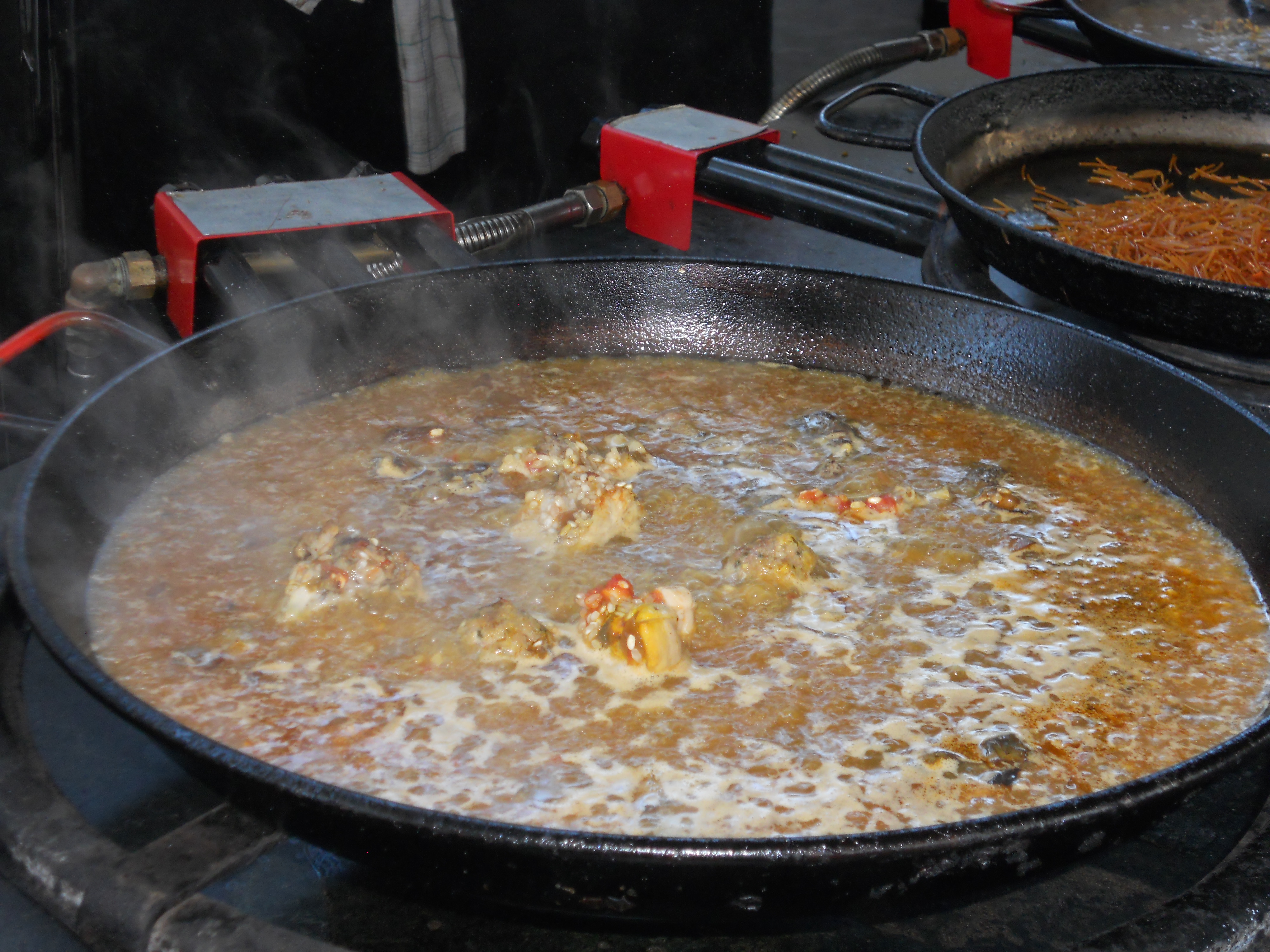
early stage of the cooking process of the paella

Almost ready to be served and enjoyed …

Let’s eat!

Fideua: is other version of the traditional recipe made with short angel hair pasta (cabellos cortos) instead of rice. Very popular dish in Barcelona

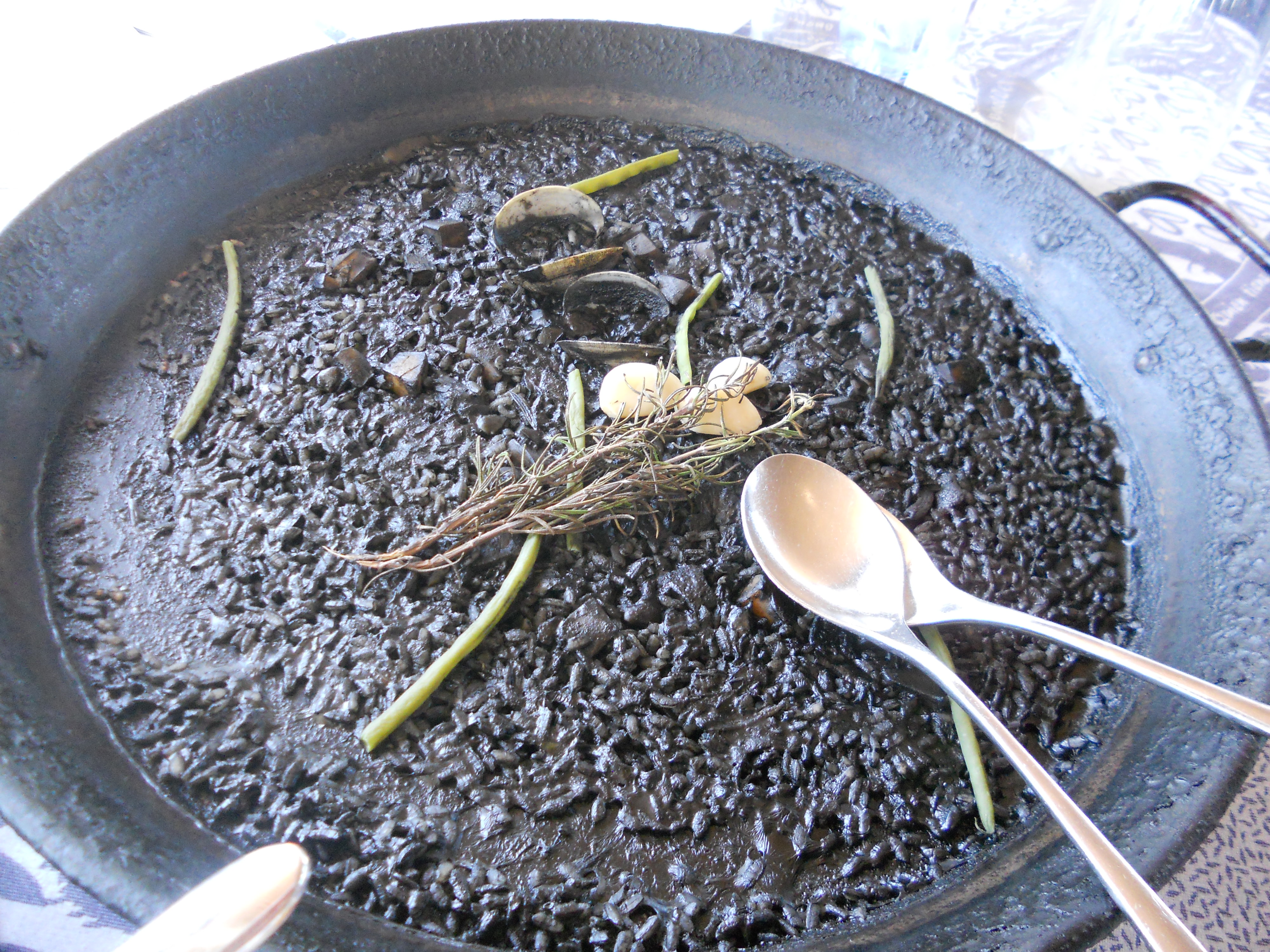
If you are visiting Barcelona a must place to enjoy paella, fideua and black rice is “El Xiringuito de Escribá”. You will be delighted by the food, the service and by the amazing location by the beach

“Black rice”

restaurant: “El Xiringuito de Escribá” in Barcelona

Made in Japan

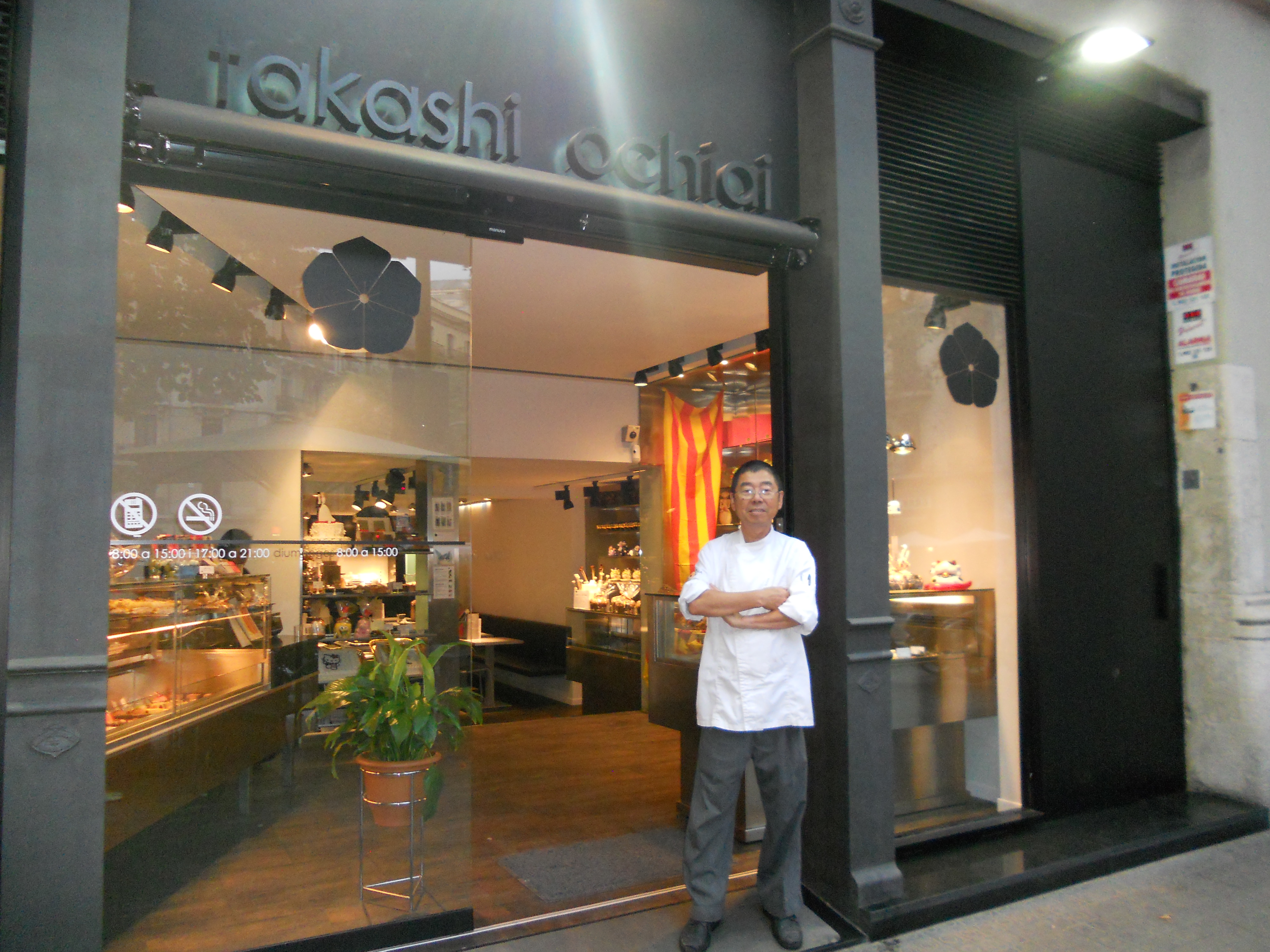
Is it possible to find authentic Japanese desserts, pastries, cakes and even chocolates in Barcelona?. The answer is: Sí! and by the hand of the well-known Pastry Chef: Takashi Ochiai. He is the only Japanese pastry chef that has his own patisserie in Spain.

Chef Takashi Ochiai opened his first patisserie in 1983 and since then, you will find him every day in his “obrador” (pastry kitchen), working with so much passion and creating a wide repertorie of delicious Japanese pastries and treats. As Chef Ochiai’s own words will state: “everything at my patisserie is made in Japan; from the chef to the chair you sit in my tea room”. This Chef fidelity to his country and culture makes “Ochiai Pastisseria” unique and exclusive in Barcelona.

Before coming to Barcelona, Chef Takashi Ochiai, was already working in the pastry industry in well-known patisseries and restaurants from the Michelin guide. There, he learnt all about artisanal chocolate work. Time passed by and chef Ochiai decided that it was time to go on a “gastronomic adventure” (sounds familiar…) that brought him to the top restaurants in England where he worked and learnt from French Chefs all about “avant-garde” culinary and pastry creations. Once in England, Chef Ochiai not only made peace with his inner ambition of learning more, but he also met his lovely wife: María Carmen, who happened to be from Barcelona. And we all known what that meant: destiny was calling again to Chef Ochiai, and a new door was opening up before his eyes!. This young couple moved and settled down in Barcelona where they opened their first patisserie.

In the beginning, chef Ochiai only offered pastries to the taste of the “Catalan palate”, you know, “brazo gitano con nata” (swiss roll with Chantilly), “ensaimadas” (traditional flat pastry with pastry cream), and more. But destiny was going to knock his door again and this time by the hand of a Japanese business man who found very strange to see a Japanese pastry chef making “Catalan” pastries. That was a time of reflexion for Takashi Ochiai who understood that he needed to come back to his roots, to his culture and the flavors of the beautiful Japan.

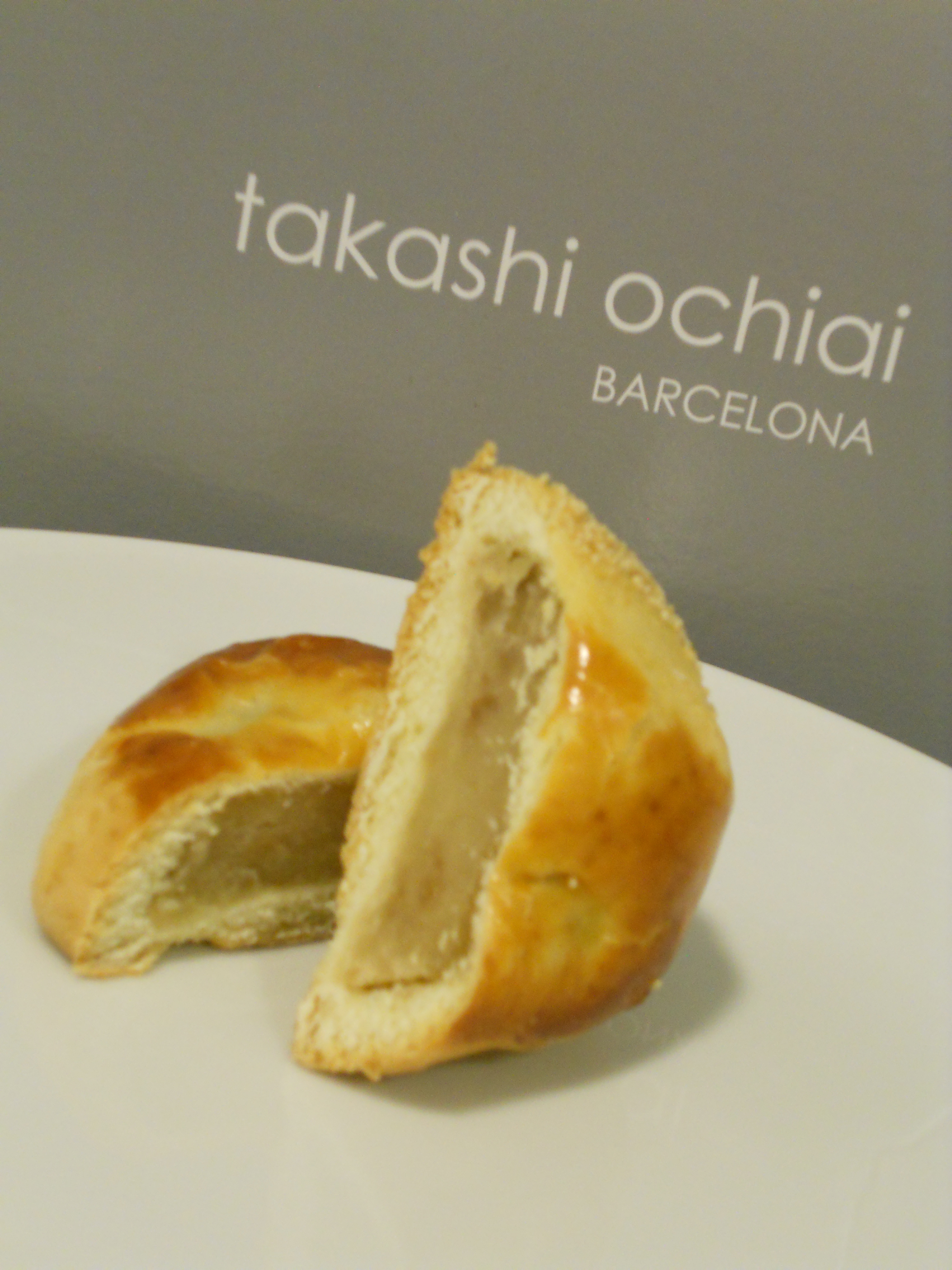
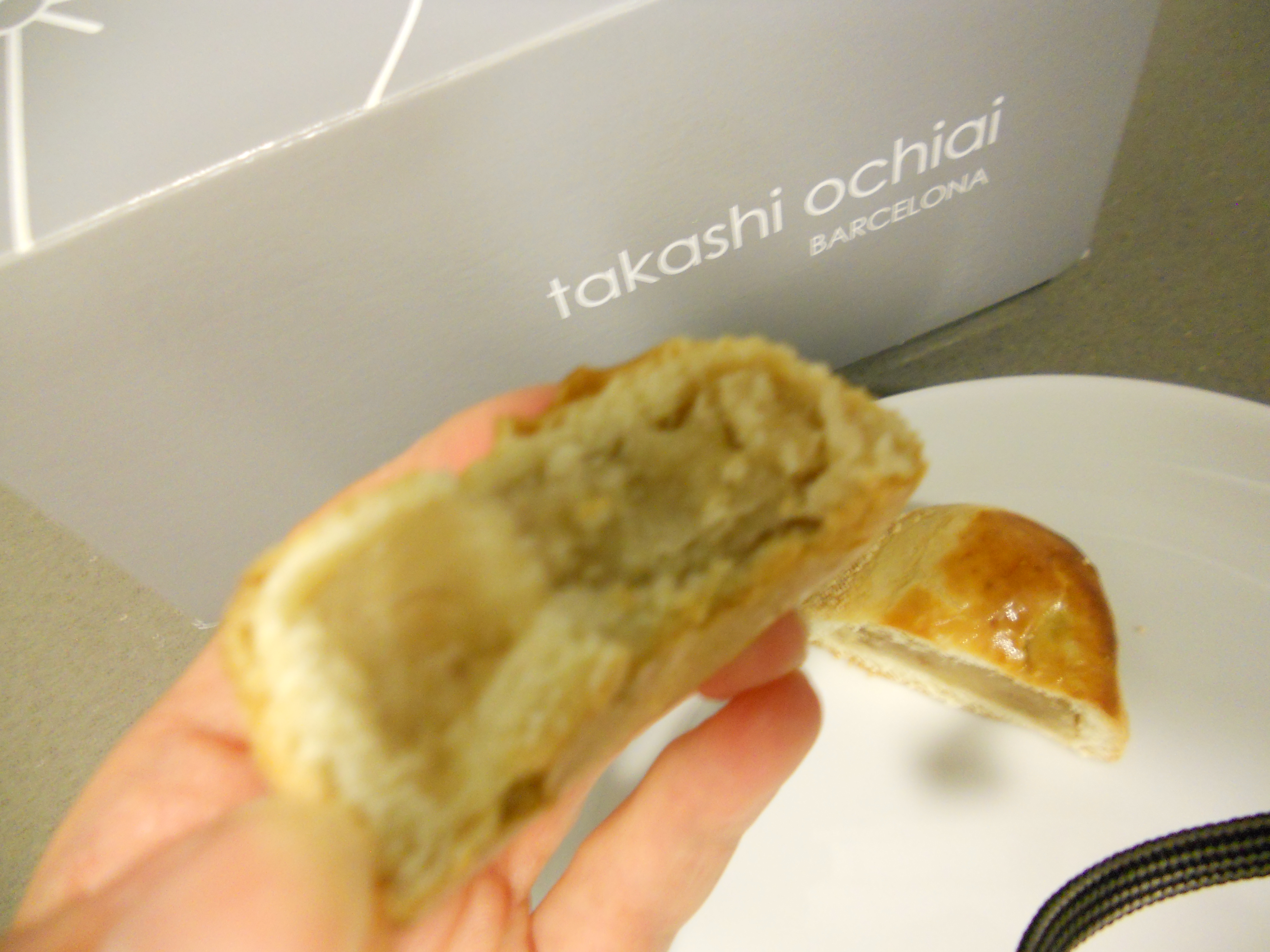
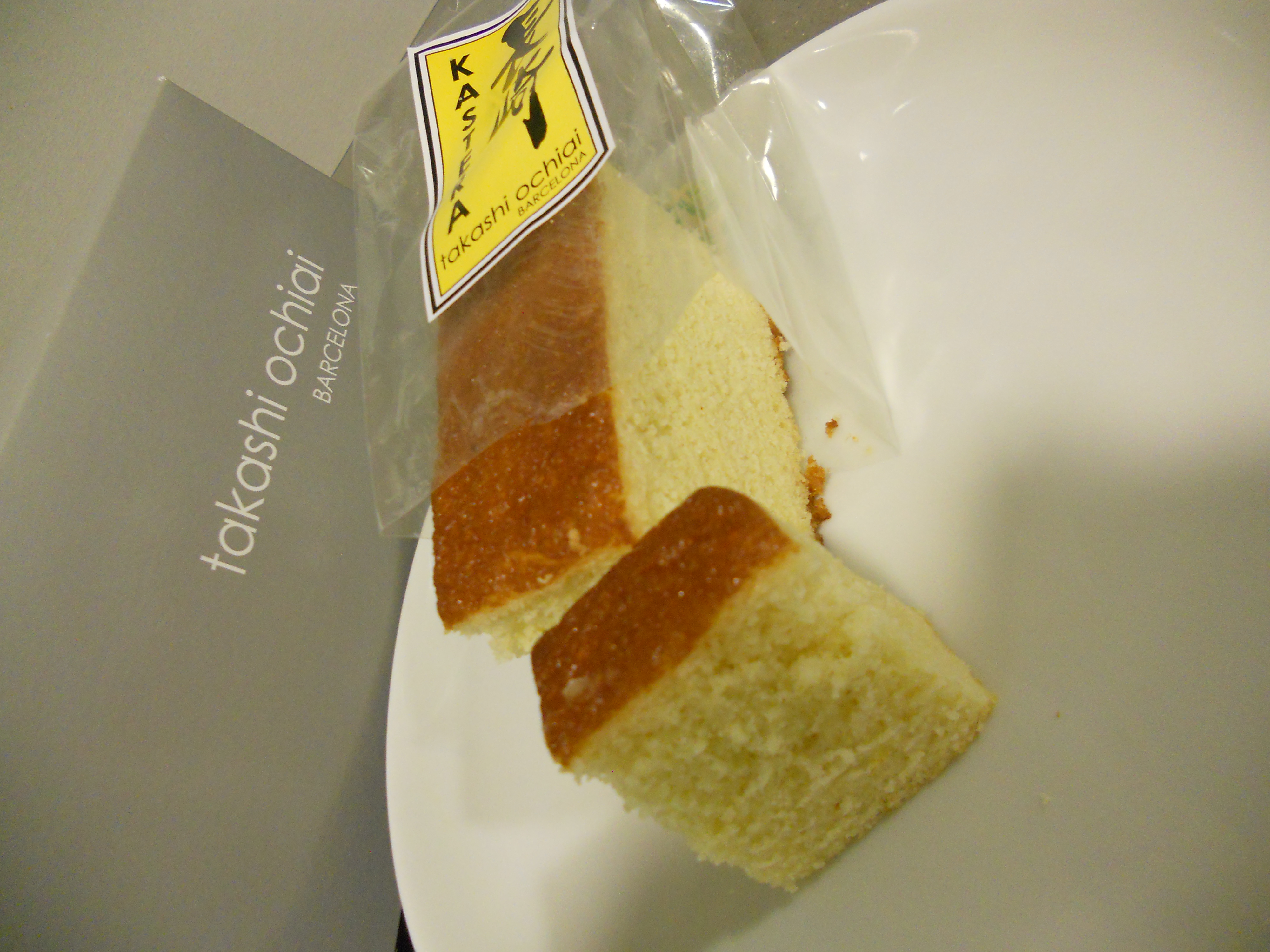
Nowadays, at “Ochiai Pastisseria” we can taste the authentic flavors of Japan in each bite. From “dorayaki” (biscuit filled with soybean confit that is famous because it is the delight of the kid’s cartoon character named Doraemon), “green tea mochi” (a best seller), “kurimanju” (paté brisé dough filled with chestnut confit), “kimishigure” (made with white soybean paste and egg yolk soybean paste), “kastera” (a very moist sponge cake that was brought to the city of Nagasaki in 1543), to traditional cakes, tarts (like yuzu mousse tart), chocolate truffles,  and much more!

“kurimanju” before

and “kurimanju” after

unwrapping the goodness of this “Kastera” super moist sponge cake with delicate flavors

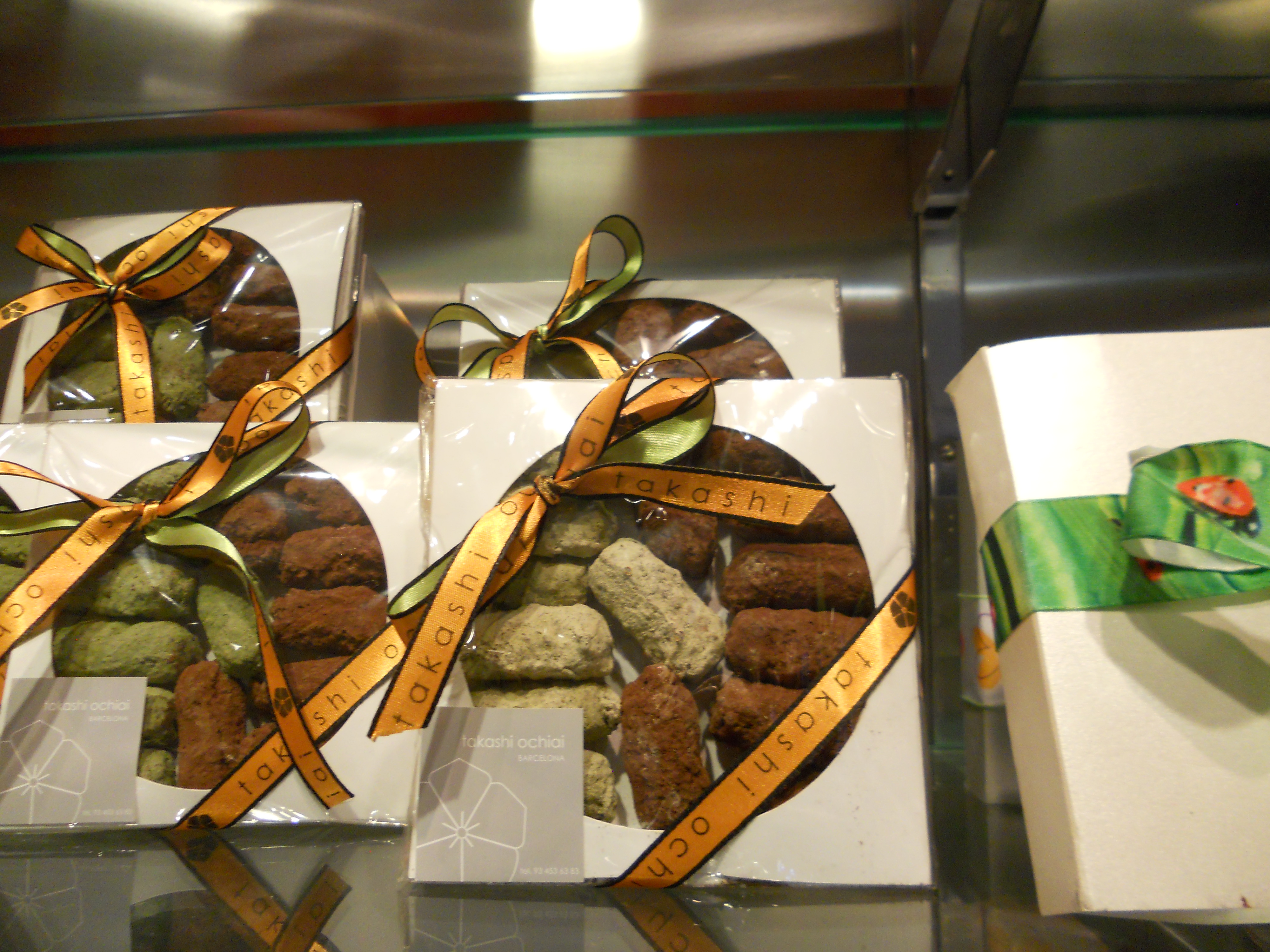
“Matcha- passion fruit” and chocolate truffles ready to go in a nice packaging imported from Japan

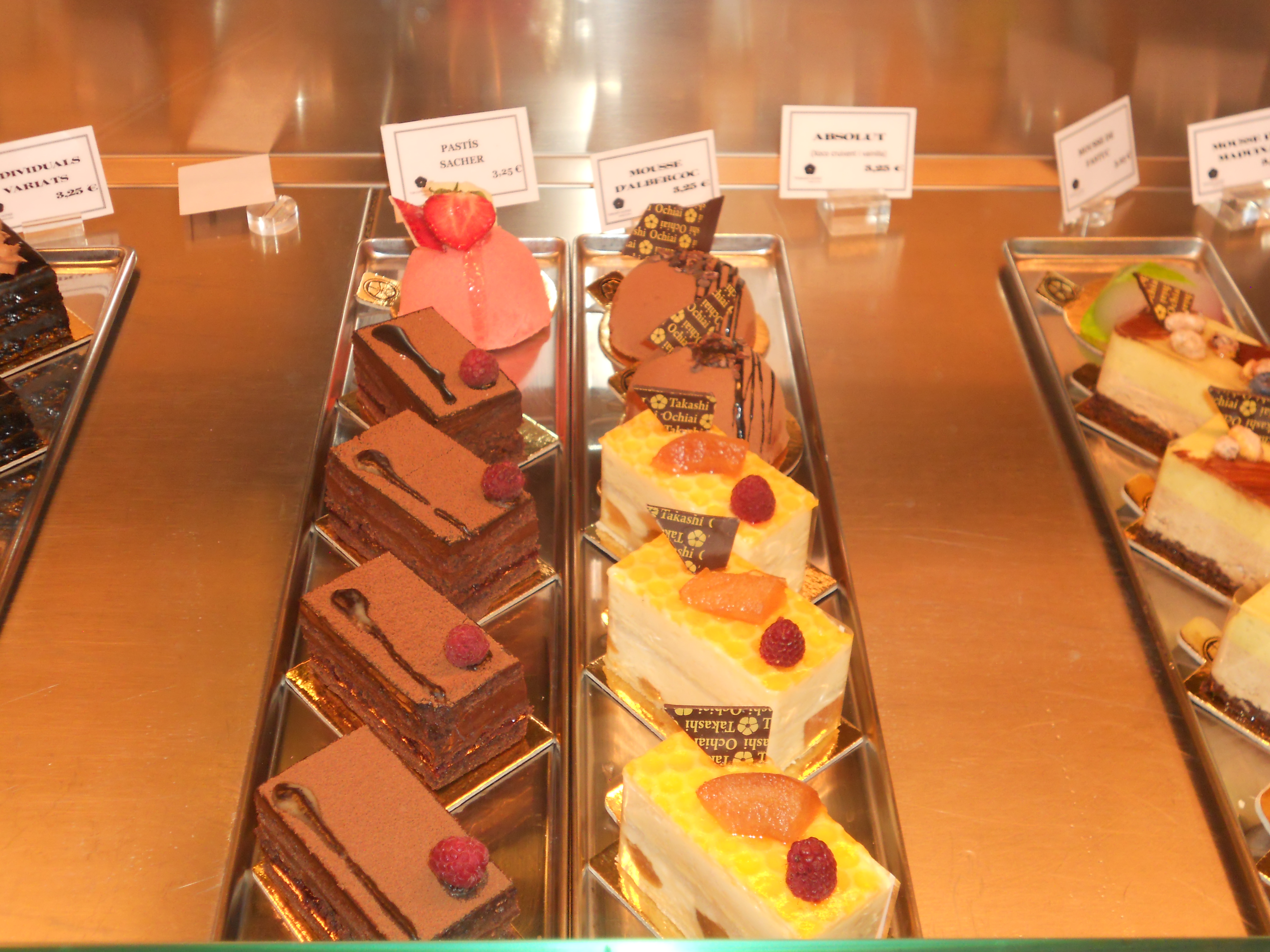
chocolate-mint mousse, Opera cake, Mont blanc, yuzu mousse, Matcha and raspberry mousse, yogurt and mango mousse, are many of the individual tarts and cakes you can find at the patisserie

Isn’t it cute?… it is the “Erizo” cake! … sponge cake, heart of chocolate mousse, chocolate ganache and toasted pine nuts. A delicious cake for a child or for an adult with a child’s heart… your choice.

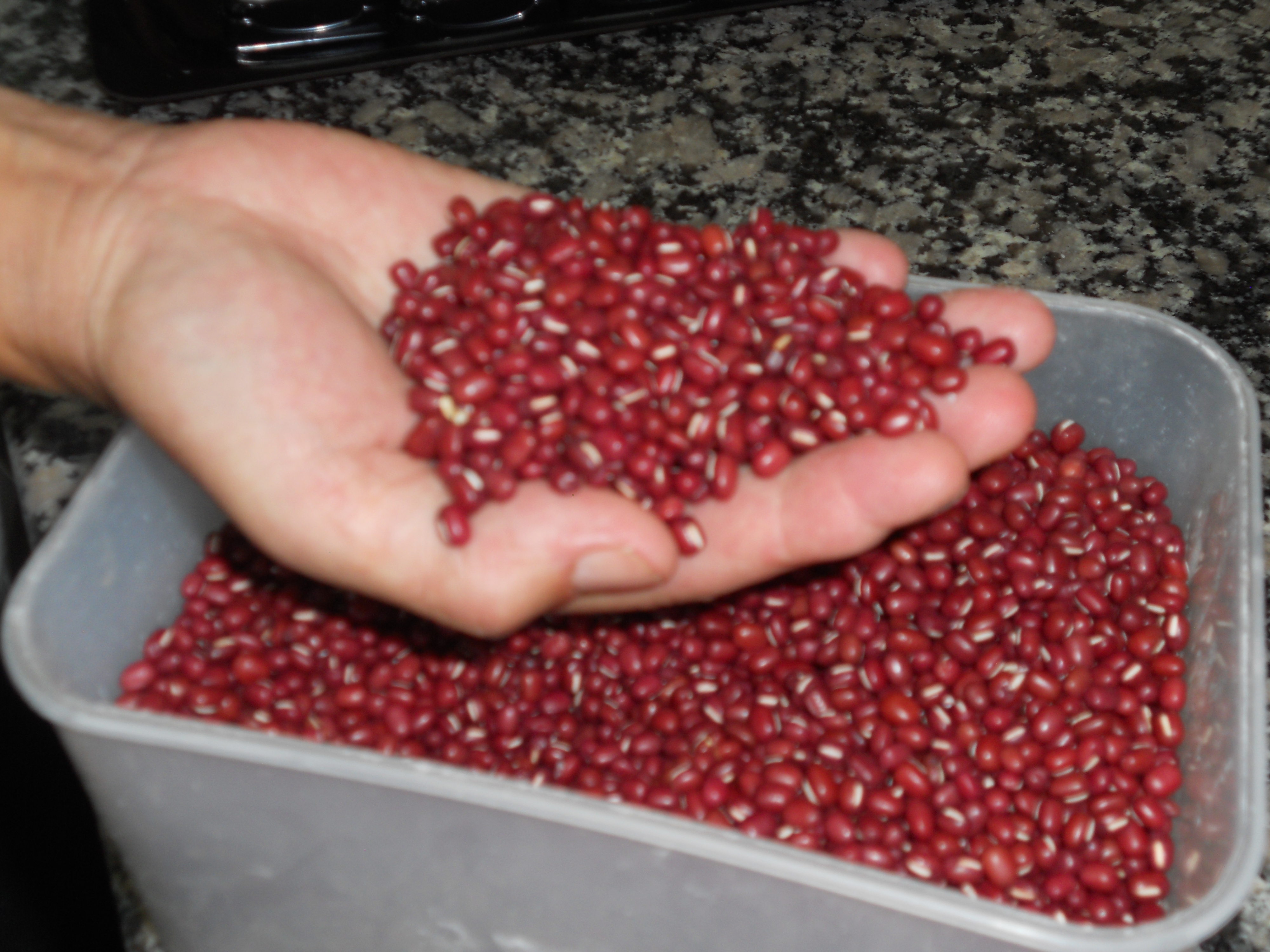
These Asian soybeans named “Azuki” are the stars of most of the Japanese desserts and pastries

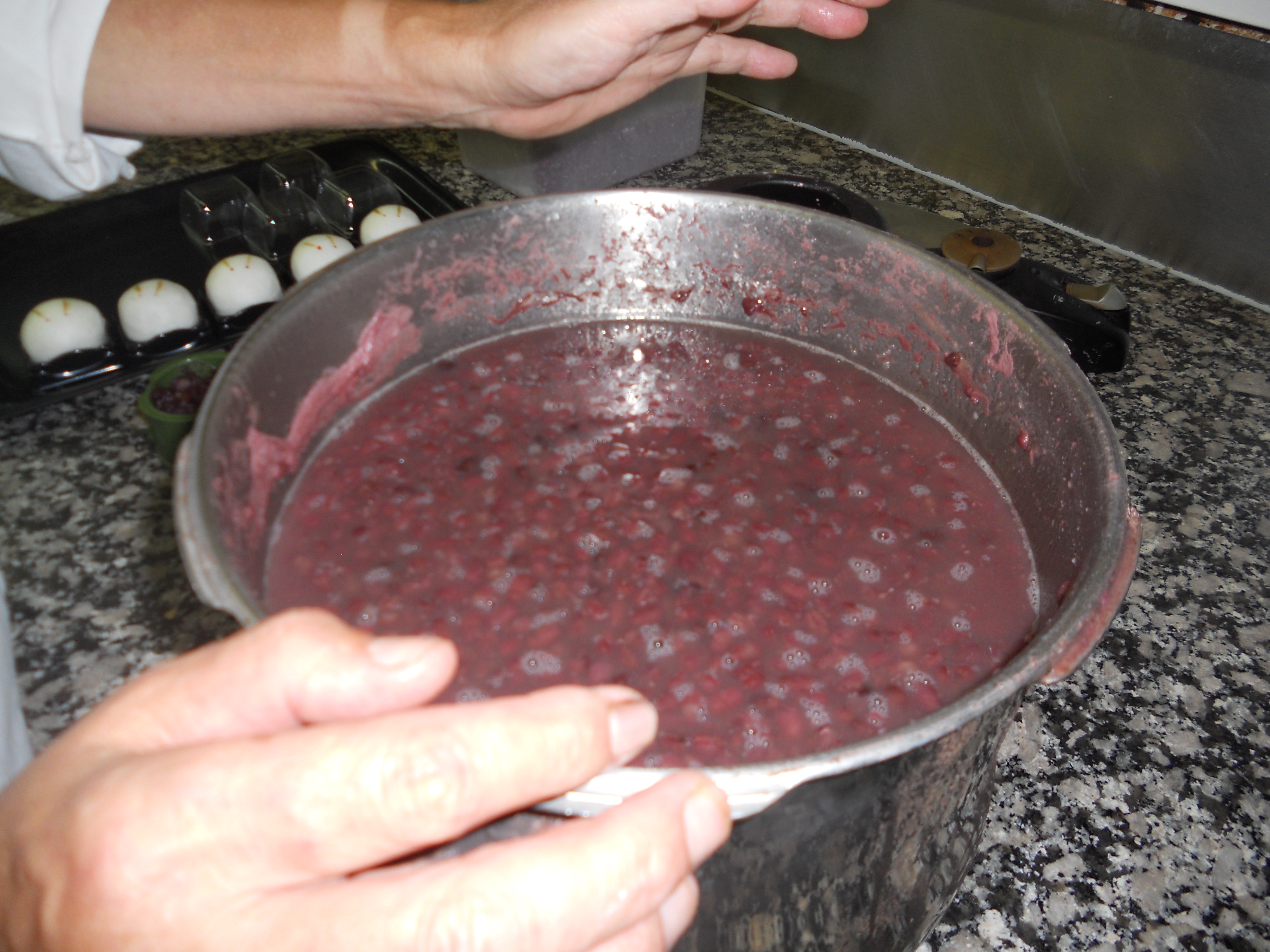
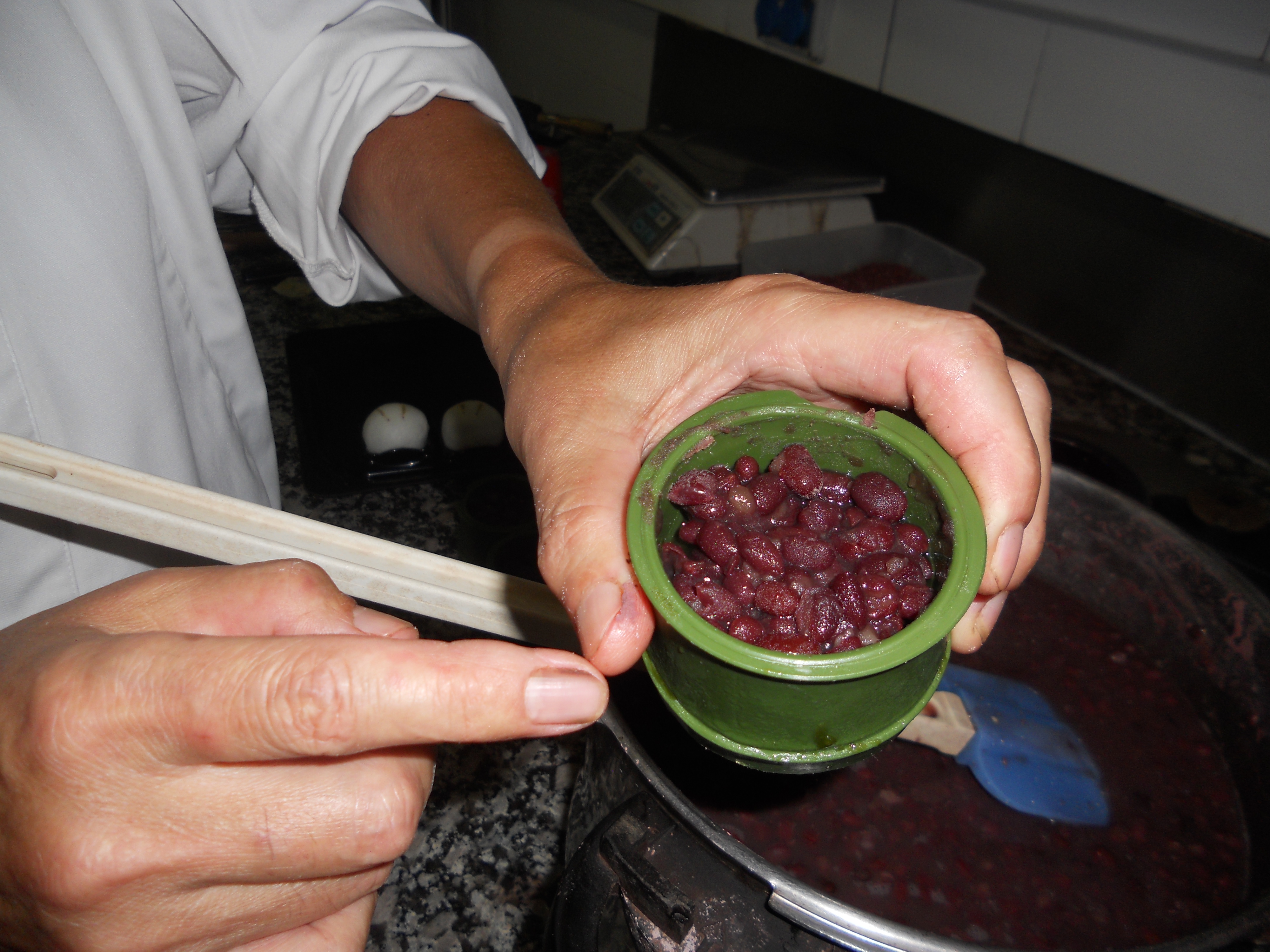
The “Azuki” soybeans are simmered in a pot with water and sugar for 12 hours to obtain the soybean confit that will be incorporated in some of Chef Ochiai’s creations

“Azuki” Soybean confit that is used in many traditional Japanese pastries like: “Daifuku”, “Fumanju” and “Dorayaki”

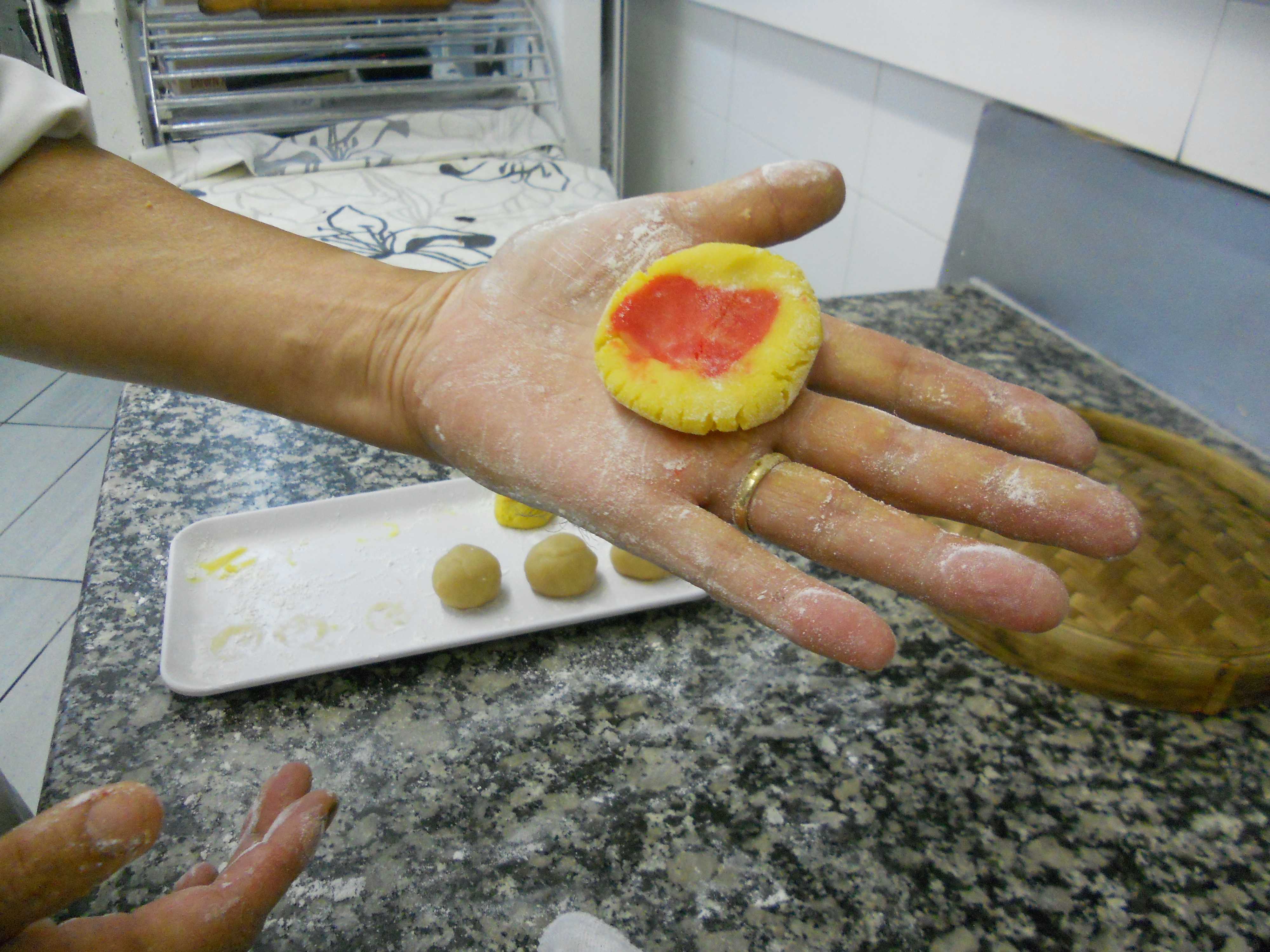
Chef Ochiai makes “kimishigure” by first flattening the soybean-egg yolk paste with red food coloring

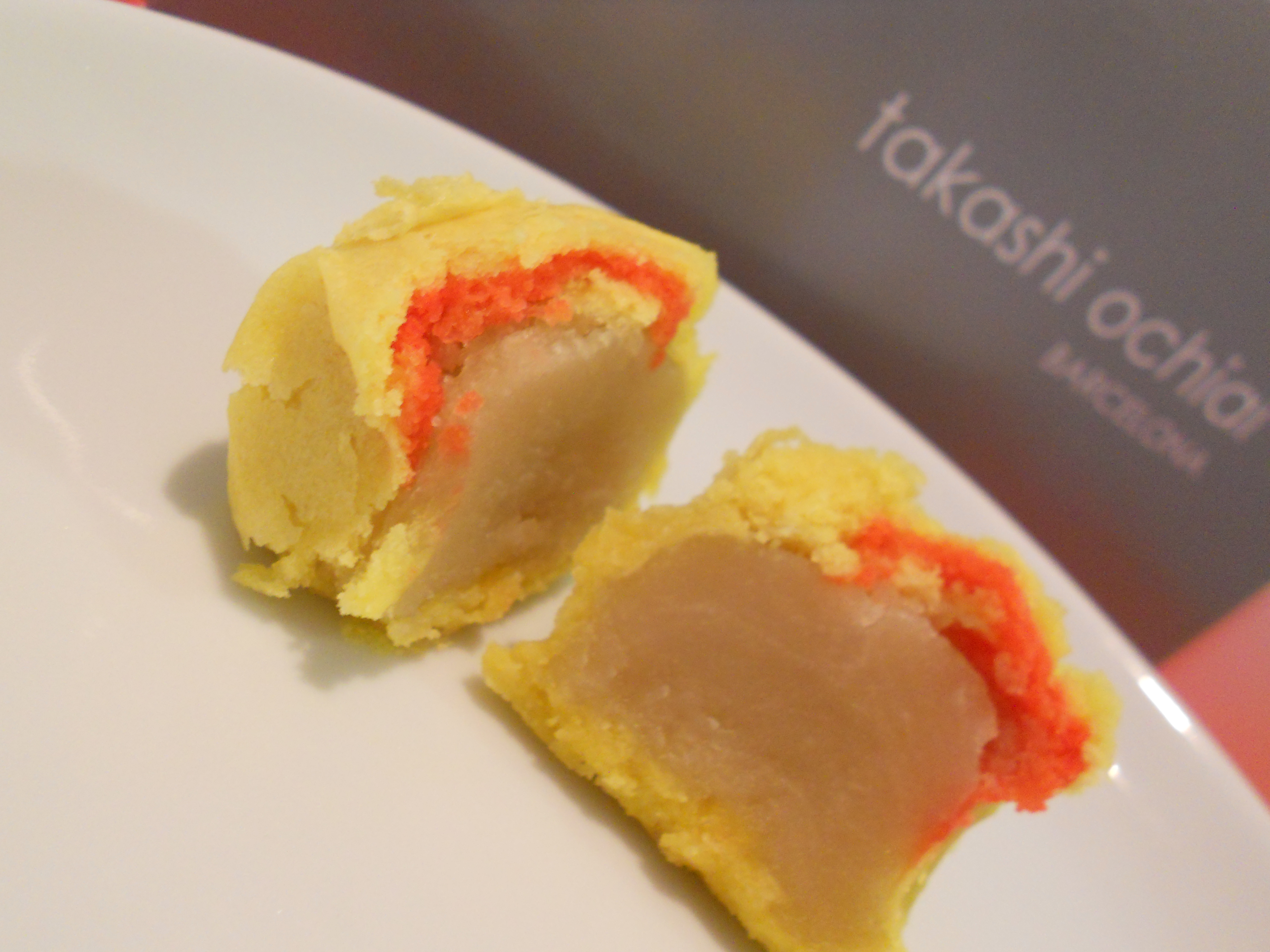
Then, he adds the white soybean paste in the center being careful to keep the same consistency in both pastes. That will help us to obtain a “kimishigure” that will not break during the steam cooking process

Prepare those hands because it is time to be shaped into a round nice “kimishigure”

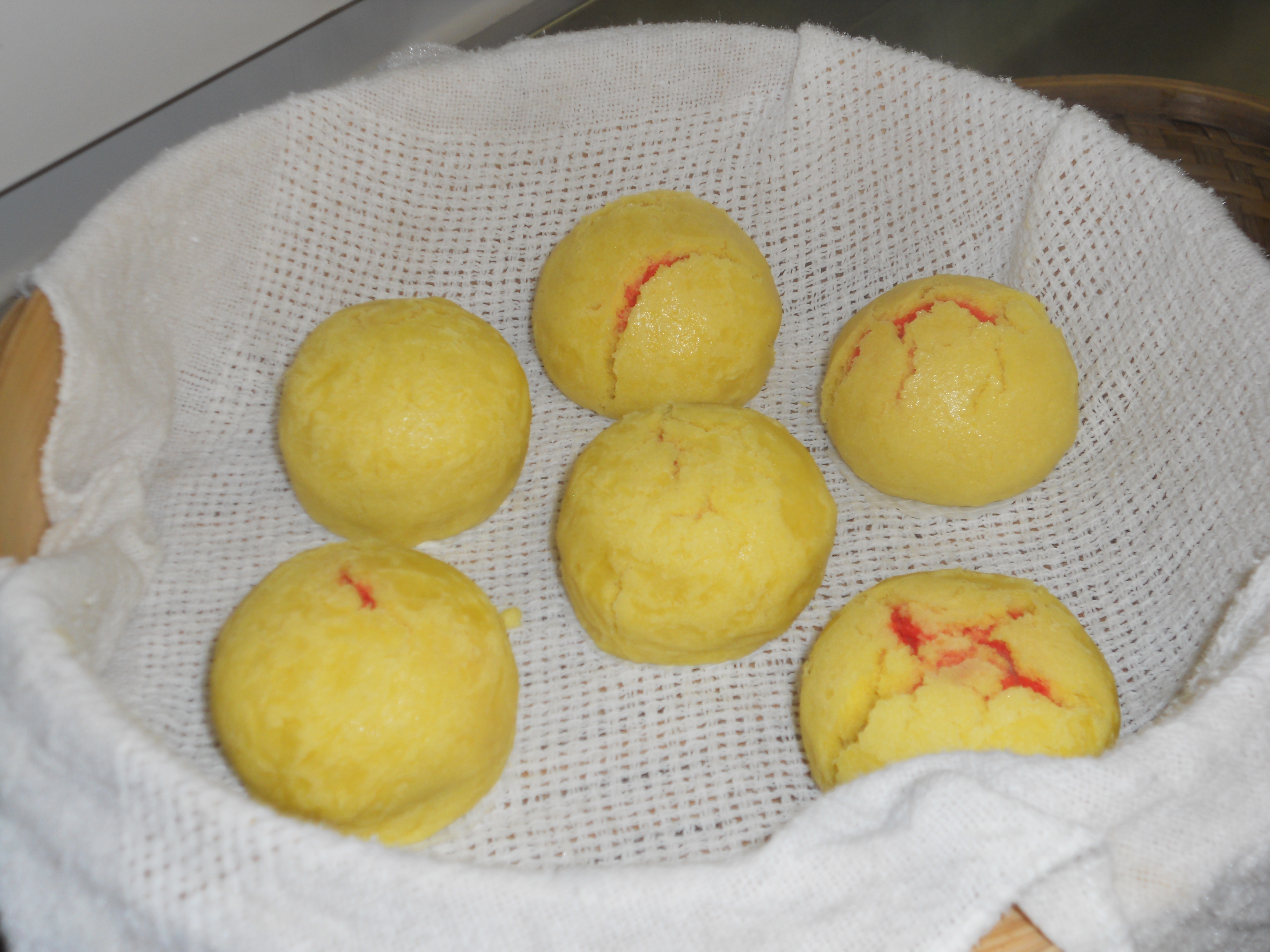
After cooking in a Japanese bamboo covered steamer for ten minutes our “Kimishigure” are almost ready to be tasted!

Oh, you are looking so good “kimishigure”!… ok, I will let you cool off at room temperature for a while, but after that, you are all mine!

The Master and the masterpiece!

yummy! …

So, now you know, if you ever come to Barcelona and your cravings call for authentic Japanese pastries and dessert: “Ochiai Pastisseria” is the place to go. You can either enjoy the Chef’s creations at his tea room or bring some home, like this nice box of assortment pastries packed exclusive “pour moi”. Arigato Chef Ochiai!